
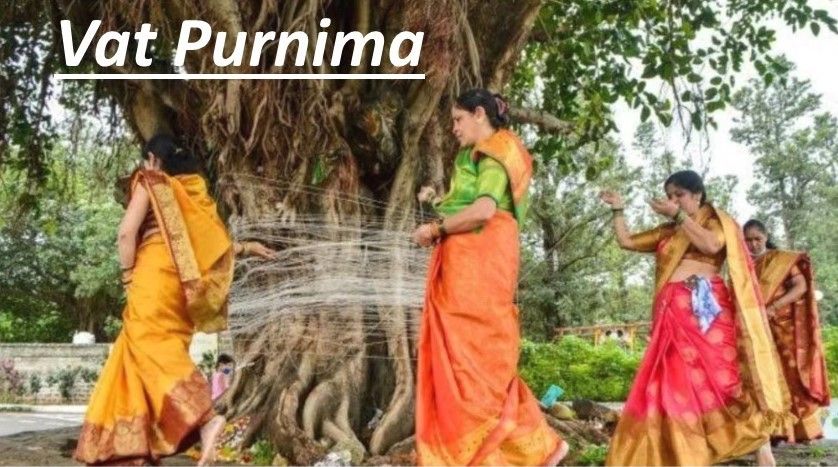
Vat Purnima, also known as Wata Purnimaor Vat Savitri, is a revered festival celebrated in Maharashtra, Gujarat, Goa, and parts of eastern Uttar Pradesh. Observed on the full moon day of the Hindu month of Jyeshta (June), it derives its name from the sacred banyan tree (vat), around which married women perform rituals for the well-being and longevity of their husbands. The word Purnima signifies the full moon, marking the auspicious timing of this observance.
Legend of Savitri and Satyavan
The foundation of Vat Purnima lies in the legendary tale of Savitri and Satyavan, a story that epitomizes devotion and fidelity. According to prophecy, Satyavan was destined to die young. One day, while resting on Savitri’s lap, he passed away. Lord Yama, the God of Death, arrived to claim his soul, but Savitri’s unwavering love and determination prevented her from letting go.
Her persistence compelled Yama to grant successive boons: first for the health of her in-laws, then prosperity for her parents, and finally, a son. Realizing that the last boon was impossible without restoring Satyavan’s life, Yama relented and revived him. This Act Immortalized Savitri as the epitome of a devoted wife, and her story became the spiritual foundation of Vat Purnima.
Rituals of Vat Purnima
The rituals of Vat Purnima are rich in symbolism and devotion. Married women dress in bridal attire, adorned with jewelry, and observe a fast through the night. The next morning, they gather around the banyan tree to perform sacred rites:
- Prayers with Ganga water and sprinkling vermilion (kumkum) on the tree.
- Tying threads of red and yellow cotton around the trunk, symbolizing the marital bond.
- Parikrama — circling the tree seven times, signifying eternal ties.
- Listening to Vat Savitri Vrata, the recitation of Savitri’s tale, in groups.
- Offering fruits and garments in bamboo baskets to saints, marking the conclusion of the fast.
These rituals not only honor Savitri’s devotion but also reinforce the sanctity of marriage in Hindu tradition.
Significance of Vat Purnima
Vat Purnima is more than a ritual; it is a celebration of love, sacrifice, and resilience. For married women, it represents:
- Longevity of husbands — prayers and fasting are believed to ensure their well-being.
- Prosperity of family — blessings are sought for harmony and abundance.
- Symbol of devotion — the festival embodies the ideal of a wife’s unwavering love and loyalty.
Traditionally, the festival was observed for three days and nights, but in modern times, the focus remains on The Main Ritual Day. Despite this change, its essence continues to inspire generations of women who see Savitri as a role model of courage and devotion.
Cultural Importance
Vat Purnima is not just a religious observance but also a cultural celebration. It strengthens community bonds as women gather together, share stories, and collectively honor the banyan tree, which itself symbolizes immortality and resilience. The banyan tree, with its ever-expanding roots and branches, is seen as a metaphor for eternal life, making it the perfect centerpiece for a festival dedicated to longevity and devotion.
Conclusion
Vat Purnima remains a timeless reminder of the power of love and determination. Through fasting, prayers, and rituals, women reaffirm their commitment to their husbands and families, keeping alive the legend of Savitri and Satyavan. It is a festival where spirituality, tradition, and culture converge, making it one of the most cherished observances in India.