
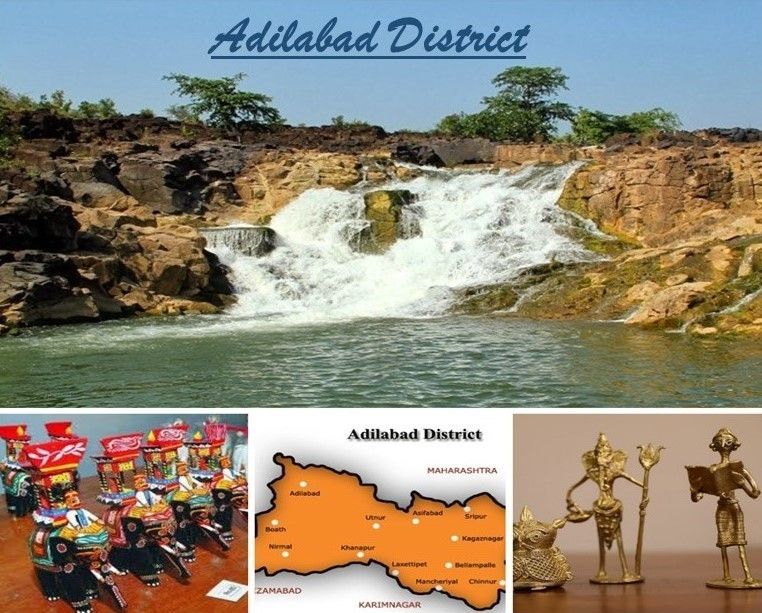
Nestled in the northernmost part of Telangana, Adilabad District is a captivating region where ancient history, tribal traditions, and natural beauty converge. Once part of Andhra Pradesh, Adilabad now stands as a cultural bridge between South and Central India, offering a rich tapestry of experiences for travelers, historians, and nature enthusiasts.
Geography and Natural Setting
Spanning 4,153 square kilometers, Adilabad is bordered by Maharashtra to the north and west, Komaram Bheem Asifabad to the east, Mancherial to the southeast, and Nirmal to the south. The District is cradled between the Godavari and Penganga rivers, with dense forests, fertile plains, and rolling hills shaping its landscape. The town of Adilabad, located approximately 304 kilometers north of Hyderabad, serves as the administrative center and retains a rustic charm that appeals to those seeking serenity.
Historical Significance
The name Adilabad is derived from Ali Adil Shah, the Sultan of Bijapur, though it was previously known as Edlabad during the Qutub Shahi period. The region has been ruled by a succession of dynasties including the Mauryas, Satavahanas, Kakatiyas, Rashtrakutas, and Gond Rajas. Archaeological findings in places like Luxettipet, Boath, and Bhainsa reveal human habitation dating back to the Mesolithic and Paleolithic eras, highlighting its deep historical roots.
Demographics and Linguistic Diversity
Adilabad has a population of nearly 709,000, with a sex ratio of 989 females per 1,000 males and a literacy rate of 63.46%. The district is home to several tribal communities such as the Gonds, Kolams, Pardhans,and Thotis. This cultural mosaic is reflected in its linguistic diversity: Telugu (36.5%), Marathi (19.67%), Gondi (17.23%), Urdu (10.23%),and Lambadi (7.1%) are widely spoken, creating a vibrant social fabric.
Administrative Structure
Governance in Adilabad is organized into two revenue divisions Adilabad and Utnoor which encompass 18 mandals and 508 villages. The town of Adilabad is the district’s only municipality. A District Collector oversees administration, supported by departments focused on health, education, agriculture, and infrastructure development.
Reorganization for Better Governance
In October 2016, Adilabad underwent a major administrative overhaul, resulting in the creation of four separate districts: Adilabad, Komaram Bheem Asifabad, Mancherial, and Nirmal. This reorganization aimed to decentralize governance, improve administrative efficiency, and ensure equitable resource distribution.
Tribal Mandals and Rural Life
Adilabad’s rural landscape is dotted with villages that preserve traditional agricultural practices and tribal customs. Mandals such as Boath, Tamsi, Narnoor, and Utnoor are known for their tribal settlements. These areas are central to development programs that aim to harmonize tradition with modern progress.
Developmental Challenges and Initiatives
Despite its cultural richness, Adilabad is listed among India’s 250 most backward districts. It receives support from the Backward Regions Grant Fund Programme (BRGF)to address developmental disparities. Recent efforts have focused on improving road connectivity, irrigation, education,and healthcare. Special attention is given to tribal welfare, with targeted programs designed to uplift marginalized communities.
Economic Backbone
Agriculture is the cornerstone of Adilabad’s economy. The district is often referred to as the “City of Cotton” due to its vast cotton cultivation. Other major crops include jowar, paddy, wheat, maize, and groundnuts. Horticulture and mulberry farming also contribute significantly. The region is rich in minerals such as coal, limestone, granite, and manganese, supporting small-scale mining and related industries.
Cultural Richness
Adilabad is a repository of tribal art, music, and dance. Instruments like the Kingri, made from horse hair, showcase the district’s unique artistic heritage. Tribal festivals, deeply rooted in nature worship and ancestral reverence, continue to thrive, offering insights into the spiritual depth of the region.
Indigenous Crafts: Nirmal Toys and Dokra Art
The district is famed for its traditional crafts, particularly the Nirmal toy-making industry. Local artisans create intricately designed wooden toys and paintings that are celebrated across India. Another highlight is Dokra art, a metal casting technique using the lost-wax method. Practiced by tribal artisans, Dokra items are both culturally significant and economically empowering.
Tourism: A Multifaceted Experience
Adilabad offers a rich and varied tourism experience:
- Nature Tourism: Kuntala Waterfalls, the highest in Telangana, along with Pochera Falls, Gayatri Falls, and Kadam Dam, attract nature lovers. The Pranahita Wildlife Sanctuary is a haven for birdwatchers and eco-tourists.
- Pilgrimage Tourism: Sacred sites like the Basar Saraswathi Temple, Jainath Temple, and Kala Ashram reflect the district’s spiritual diversity and tribal syncretism.
- Leisure Tourism: Activities such as trekking, camping, and cultural tours offer immersive experiences. Local fairs and tribal festivals provide authentic engagement with Adilabad’s vibrant lifestyle.
Conclusion
Adilabad District stands as a living testament to Telangana Rich Heritage, ecological splendor, and tribal traditions. As development initiatives gain momentum, the district is poised to emerge as a model of inclusive growth. Whether you're an adventurer, historian, or culture enthusiast, Adilabad offers a journey into the heart of India’s multifaceted legacy.