
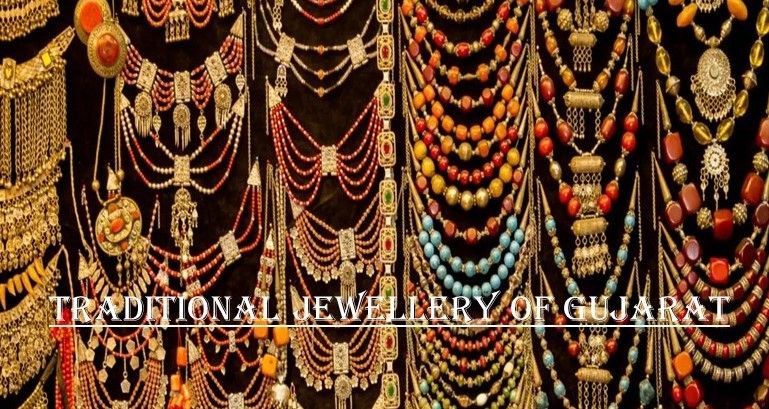
Gujarat, situated on India’s western coast, is a land steeped in vibrant traditions, colorful attire, and artistic heritage. Among its many cultural treasures, traditional jewellery holds a special place. These ornaments are not just decorative pieces but symbols of pride, identity, and social status. Crafted with intricate detailing and often made of gold, silver, and precious gemstones, Gujarati jewellery reflects both artistry and investment value.
Jewellery in Festivals and Celebrations
The magnificence of Gujarati jewellery is best Witnessed During Festivals such as Navratri and Dussehra. During these celebrations, men and women dress in traditional costumes adorned with lavish ornaments. The jewellery enhances the festive spirit, adding elegance, grandeur, and a royal touch to the joyous atmosphere.
Jewellery of Gujarati Women
Gujarati women wear a wide variety of ornaments including bangles, earrings, necklaces, chains, nose pins, and rings. Married women traditionally wear the Mangalsutra and apply Sindoor as symbols of marital devotion. In rural areas, tribal silver jewellery is common, reflecting rustic charm and cultural identity. Waist accessories such as ornate tassel key rings further accentuate their attire, adding uniqueness and beauty.
Jewellery of Gujarati Men
Men in Gujarat also embrace jewellery, though in simpler forms. Golden chains, rings, and silver ornaments are popular choices. Embellished turbans serve as striking accessories, adding dignity and masculinity to their traditional look.
Iconic Traditional Jewellery of Gujarat
Several distinctive ornaments highlight Gujarat’s rich jewellery tradition:
- Kandora: A silver waist belt or Kamar-Bandh.
- Matha Tikka: A forehead ornament with gold chains and motifs studded with rubies and emeralds.
- Patla Bangles: Meenakari resin bangles decorated with kundan, pearls, and gemstones.
- Kundan Rani Haar: A royal bridal necklace enhancing a bride’s grace.
- Damini: A forehead ornament with side loops attached to the hair.
- Kundan Butti: Earrings with chains passing over the crown of the head.
- Baju-Bandh: Armlets worn on the upper arm, especially by brides.
- Chandan Haar: A necklace with four strands of gold, symbolizing grandeur.
- Kundan Bangdi: Specially designed bridal bangles.
Bridal Jewellery of Gujarat
Gujarati bridal jewellery is a magnificent blend of gold, kundan, and diamonds. A bride’s ensemble is incomplete without ornaments such as:
- Gala no Har and Kan ni Butti (necklace with earrings)
- Nathni (nose ring)
- Bajubandh (armlet)
- Poncho (bracelet with chains attached to rings on each finger)
- Bangadi and Patla (types of bangles)
- Chandlo (forehead ornament)
- Chadda (anklet or Payal)
Her hair is neatly tied in a bun or braid, covered with a saree pallu or dupatta, while the forehead shines with Matha Tikka and Bindi. Together, these ornaments create a regal bridal look that reflects Gujarat’s cultural opulence.
Jewellery as Identity and Investment
In Gujarat Jewellery is more than embellishment it is a symbol of pride, wealth, and cultural belonging. It represents social identity and artistic heritage, while also serving as a valuable investment. The richness of Gujarati traditions finds its most aesthetic expression in these ornaments, which continue to fascinate generations.
Conclusion
The traditional jewellery of Gujarat is a timeless treasure that embodies elegance, artistry, and cultural pride. Whether worn during festivals, weddings, or daily life, these ornaments narrate stories of heritage and craftsmanship. They are not just accessories but living symbols of Gujarat’s vibrant culture.