
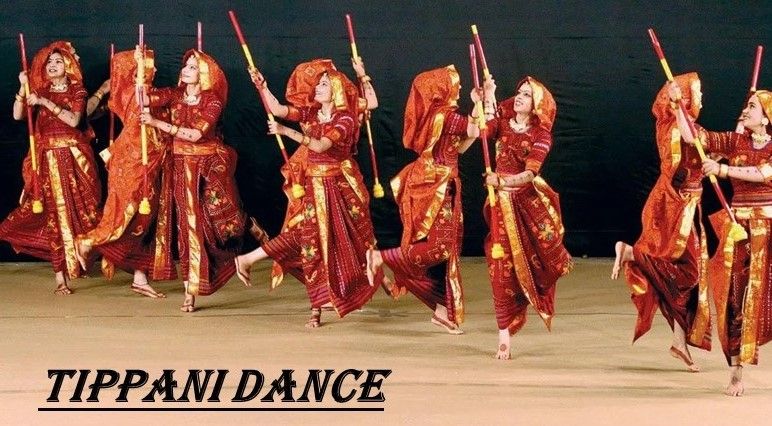
Tippani dance is one of the most vibrant and energetic folk traditions of Gujarat, India. Originating in Sorath, a region in Saurashtra along the state’s coastline, this dance beautifully mirrors the daily life and communal activities of the people. Traditionally performed by women laborers engaged in construction work, the dance involves striking long sticks called Tippani on the ground in rhythmic patterns. This practice not only helped them overcome the monotony of hard labor but also transformed routine work into a lively cultural expression.
Origins and Community Significance
The Tippani dance is deeply rooted in the lives of manual workers, particularly women of the Halli community. While engaged in tasks such as breaking stones or leveling the ground, they used the dance as a way to relieve fatigue and add joy to their work. Over time, this functional activity evolved into a recognized folk dance, celebrated for its vigor, resilience, and communal spirit. It stands as a testament to how ordinary labor can be transformed into extraordinary art.
Performance of Tippani Dance
Tippani dance is performed in groups, beginning with rhythmic beating of the ground accompanied by folk songs. As the tempo increases, dancers alternately strike the earth and clash the knobs of their mallets together. Gradually, the performance incorporates varied body movements, and towards the end, the women sit in rows, striking the floor rapidly to create an intense finale. This progression from slow rhythm to fast-paced energy makes Tippani a captivating and powerful spectacle, filled with both discipline and joy.
Instruments and Sound
The Music of Tippani Dance is created using simple yet effective instruments. Women beat the floor with long sticks, producing resonant sounds, while singing in rhythm. Others swirl their skirts as they dance, adding visual charm to the performance.
Common instruments include:
- Percussion instruments: Damru, tabla, nagara, and pot drum.
- String instruments: Ektaro, ravan hattho, jantar.
- Wind instruments: Pavo, shehani, murli, turi, and taturi.
Additionally, everyday items like a Turi(horn) and Thali (brass plate) are used to generate music, showcasing the creativity and resourcefulness of folk traditions.
Costume of Tippani Dance
The costumes worn during Tippani dance are colorful and traditional, enhancing the vibrancy of the performance. Dancers typically wear:
- A short coat called Kedia, with tight sleeves and intricate borders.
- Churidars or tight trousers.
- Embroidered caps or brightly colored turbans.
- A decorative waistband to complete the attire.
These costumes not only reflect Gujarati culture but also add elegance to the energetic movements of the dance, making the performance visually appealing.
Popularity and Cultural Role
Tippani dance is performed during major festivals such as Holi and Diwali, as well as at weddings and other ceremonies. It has also become a popular competition item in cultural programs organized by schools and colleges, ensuring its continued relevance among younger generations.
Conclusion
The Tippani dance is more than just a folk performance—it is a celebration of resilience, community, and creativity. Born out of labor, it transformed into a cultural art form that highlights the strength and spirit of Gujarati women. With its rhythmic beats, vibrant costumes, and lively movements, Tippani remains A Shining Example of Gujarat Rich Folk Heritage and continues to inspire admiration across generations.