
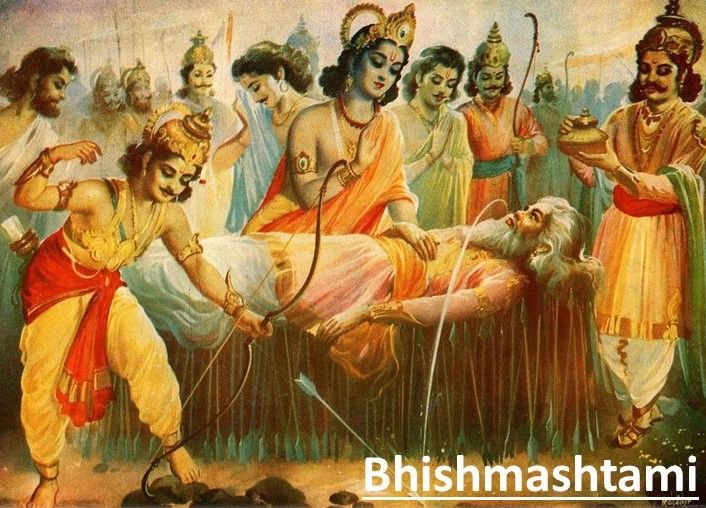
Bhishmashtami, also known as Bhishma Ashtami, is a sacred Hindu festival dedicated to Bhishma Pitamah, one of the most revered figures in the epic Mahabharata. Observed on the eighth lunar day (Ashtami) of the Shukla Paksha in the month of Magha, it usually falls on the twenty-third day of Magha according to the Hindu calendar. This day holds immense spiritual importance as it commemorates the moment when Bhishma, after enduring great suffering and sacrifice, chose to leave his mortal body and attain moksha.
History of Bhishmashtami
Bhishma was born in the Dwapara Yuga as the son of King Shantanu and Goddess Ganga. Renowned for his vow of celibacy and unwavering loyalty, he became the grand-uncle of both the Pandavas and Kauravas. During the Kurukshetra war, Bhishma was grievously wounded but, blessed with the boon of choosing his time of death, he lingered on his bed of arrows until the auspicious day of Magha Shukla Ashtami.
On this day, devotees perform rituals to pacify his soul, as Bhishma died childless and without direct descendants. Offerings of sesame seeds, boiled rice, and libations of water are made. These acts are believed to absolve sins committed during the year and bring blessings from the revered Pitamah.
Significance of Bhishma Ashtami
The festival emphasizes the importance of ancestral Worship and Devotion. According to the ancient text Dhavala, all four castes Brahmanas, Kshatriyas, Vaishyas, and Shudras—are expected to perform the rituals of Bhishmashtami, though some interpretations exclude Shudras.
The offerings are simple yet profound: water, sesame seeds, and rice. Devotees pray, “May Bhishma, the son of Shantanu, the speaker of truth and defeater of passions, obtain by this water the oblations due by sons and grandsons.” This ritual highlights Bhishma’s unmatched devotion, truthfulness, and self-control.
Bhishma’s choice to depart on Magha Shukla Ashtami underscores the day’s auspiciousness, believed to be ideal for attaining union with the supreme soul. Thus, the festival is not only about honoring Bhishma but also about reminding devotees of the values of sacrifice, duty, and righteousness.
Celebration of Bhishma Ashtami
The central ritual of Bhishmashtami is the Ekodishta Shraddha, performed in Bhishma’s honor. While some traditions restrict this ritual to those whose fathers have passed away, others allow all devotees to participate.
Key practices include:
- Tarpan ritual: Devotees gather at riverbanks, especially the Ganga, to offer water and sesame seeds, symbolizing peace for Bhishma’s soul and respect for ancestors.
- Holy dip in Ganga: Bathing in the sacred river is believed to purify the soul and free one from the cycle of birth and death.
- Offerings of rice and sesame: Simple yet spiritually powerful, these offerings reflect humility and devotion.
- Fasting and chanting: Devotees observe fasts, perform Arghyam, and recite The Bhishma Ashtami Mantra to Seek Blessings.
Cultural and Spiritual Essence
Bhishmashtami is more than a ritual; it is a reminder of Bhishma’s life of sacrifice and his steadfast adherence to dharma. His devotion to truth, loyalty to his father, and selfless service to his family and kingdom make him a timeless symbol of righteousness.
By performing the rituals of Bhishmashtami, devotees not only honor Bhishma Pitamah but also strengthen their bond with their ancestors, purify their souls, and reaffirm their commitment to living a life guided by duty and virtue.