
Introduction
Ratha Yatra, the spectacular chariot festival of Lord Jagannath, stands as one of India’s most iconic celebrations. Held annually in Puri, Odisha, this vibrant event honors Lord Jagannath, his elder brother Balabhadra, and his sister Subhadra. Observed during the monsoon months of June and July, the festival embodies themes of renewal, rejuvenation, and the eternal bond between the divine and human worlds.
What makes the Jagannath tradition unique is the intimate kinship shared between the deities and temple attendants. The daitas, regarded as the “blood relatives” of Lord Jagannath, and the devadasis, revered as his wives, highlight the deep cultural and spiritual connection that defines this tradition. Their roles remind devotees that divinity is not distant but interwoven with human life and relationships.
Legends of Ratha Yatra
The festival is steeped in mythology and folklore, each tale adding layers of meaning to the celebration. One widely cherished belief is that Lord Jagannath, accompanied by Balabhadra and Subhadra, visits his aunt’s house once every year. The journey from the Jagannath Temple to the Gundicha Temple symbolizes this familial visit, reinforcing the idea of divine beings engaging in human-like bonds of affection.
Another legend connects Ratha Yatra to Krishna’s childhood pastimes in Vrindavan. Here, the festival is seen as a divine reunion, filled with joy, love, and devotion. These stories transform Ratha Yatra into more than a ritual—it becomes a celebration of divine relationships, reminding devotees of the eternal play between gods and their devotees.
Mythological Origins
Sacred scriptures such as the Skanda Purana, Brahma Purana, and Padma Purana describe the origins of Ratha Yatra. According to these texts, the annual journey of Lord Jagannath represents the movement of cosmic energy and the eternal cycle of life. The chariot procession is not merely a physical journey; it is a spiritual metaphor for the soul’s path toward liberation.
The rolling of the colossal chariots through the streets of Puri reminds devotees that life itself is a pilgrimage, with liberation as the ultimate destination. In this way, Ratha Yatra becomes a living allegory of spiritual progress, encouraging participants to reflect on their own journey toward self-realization.
Rituals Leading to Ratha Yatra
The grandeur of Ratha Yatra is preceded by a series of elaborate rituals, each carrying profound symbolism:
Snan Yatra: The festivities begin with the ceremonial bathing of the deities. On this day, the idols are bathed with 108 pots of water drawn from a sacred well. Following the bath, the deities are believed to fall ill and remain in seclusion, symbolizing the vulnerability of human existence.
Anavarsha: After Snan Yatra, the deities enter a phase called Anavarsha, meaning “absence from public view.” Devotees cannot see them during this period, as they are believed to be recuperating. This builds anticipation for their grand reappearance during Ratha Yatra.
Netrotsava: Known as the “festival of eyes,” this ritual marks the revival of the deities. Their eyes are ritually repainted, signifying renewed vision and vitality. It underscores the theme of rejuvenation, preparing the gods for their public journey.
Nabakalebera: Every 12 to 19 years, the festival coincides with Nabakalebera, meaning “new embodiment.” During this rare event, the wooden idols of Jagannath, Balabhadra, Subhadra, and Sudarshan are replaced with newly carved ones. The old idols are ceremoniously buried within the temple premises, symbolizing death and rebirth.
These rituals emphasize the cyclical nature of existence, reminding devotees of life’s fragility and the promise of renewal.
The Main Festival
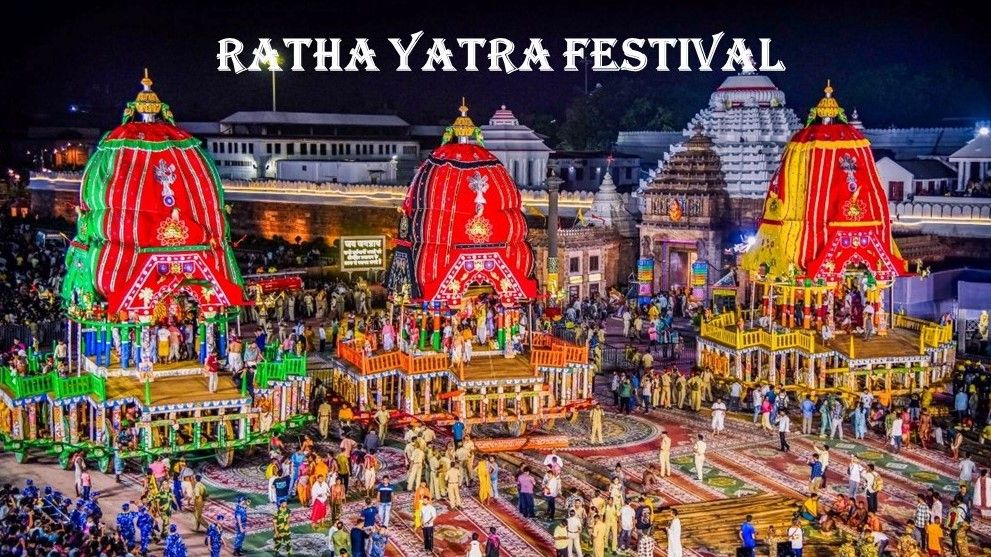
The highlight of Ratha Yatra is the pulling of the colossal chariots, each uniquely designed for the deities:
Nandighosa for Lord Jagannath
Taladhwaja for Balabhadra
Darpadalana for Subhadra
Millions of devotees gather to pull the ropes of these massive chariots, believing the act to be of immense spiritual merit. The procession from the Jagannath Temple to the Gundicha Temple spans several days, accompanied by chants, music, and devotional fervor. The sight of the towering chariots rolling through the streets of Puri is awe-inspiring, symbolizing the movement of divinity among humanity.
Masir Bari: The Aunt’s House
The Gundicha Temple, affectionately called Masir Bari or “aunt’s house,” holds special significance during Ratha Yatra. The deities reside here for nine days, symbolizing a family visit. During this period, the temple becomes a vibrant center of spiritual activity, drawing countless devotees who come to witness the divine stay and participate in rituals. This temporary residence reinforces the festival’s theme of familial bonds and divine intimacy.
Ratha Yatra Beyond Odisha
While Puri remains the epicenter of Ratha Yatra, the festival has spread far beyond Odisha, particularly to West Bengal, where it has taken on unique regional flavors:
Mahesh Ratha Yatra: The second oldest and most renowned after Puri, Mahesh Ratha Yatra dates back over 600 years. Introduced in the 14th century by Kamalakar Piplai, it has evolved into a major cultural event in Bengal. The massive chariot here is among the tallest in India, and pulling it is considered a sacred act. The festival is enriched with fairs, cultural programs, and devotional songs.
Guptipara Ratha Yatra:Celebrated with vibrant community participation, Guptipara’s procession is accompanied by folk performances, blending devotion with local artistry.
Mahishadal Ratha Yatra: Known for its grandeur, Mahishadal’s chariot is adorned with intricate designs, and the event draws devotees from across the region.
Rajbalhat Ratha Yatra: Steeped in tradition, Rajbalhat’s rituals closely resemble those of Puri, emphasizing authenticity and devotion. Its unique chariot design is revered by locals as a symbol of divine presence.
Together, these festivals showcase the widespread influence of Jagannath culture beyond Odisha, uniting communities through shared devotion and cultural pride.
Cultural Significance
Ratha Yatra is more than a religious occasion; it is a cultural phenomenon. It embodies the traditions of Odisha and Bengal, uniting people across regions and communities. The kinship between deities and temple servants, the rituals of renewal, and the grandeur of the chariot procession highlight the deep spiritual and cultural significance of the festival.
It is a living tradition that continues to inspire devotion, creativity, and community spirit. For millions, Ratha Yatra is not just about witnessing the divine journey but also about participating in a collective expression of faith and cultural identity.
Conclusion
Ratha Yatra is a celebration of faith, renewal, and community. From Puri’s majestic chariots to Bengal’s historic traditions, it reflects the timeless devotion to Lord Jagannath. The festival not only rejuvenates the deities but also revitalizes the spirit of millions of devotees.
As the colossal chariots roll through the streets, they carry with them centuries of tradition, culture, and devotion, making Ratha Yatra one of the most cherished cultural events in India. It is a reminder that spirituality is not confined to temples it lives in the streets, in the hearts of devotees, and in the collective rhythm of faith and festivity.