
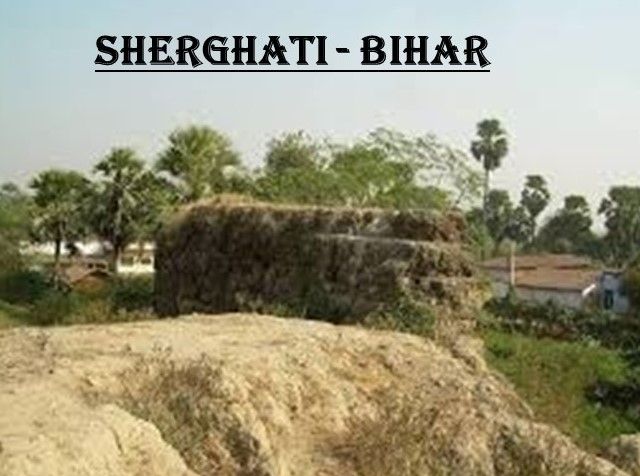
Sherghati, once known as Shergotty, is a subdivision-level town in Bihar’s Gaya district. Celebrated for its historical importance, cultural richness, and natural beauty, Sherghati is a destination where ancient ruins, temples, and tales of bravery coexist with modern life.
Location of Sherghati
Sherghati is situated in the southernmost part of Bihar, within Gaya district. It lies at 24.57°N latitude and 84.78°E longitude, with an elevation of 121 meters (396 feet). The town borders Jharkhand’s Chatra district, where the dense forest belt gradually fades as one enters Sherghati. Two rivers, the Morhar and the Sorhar (also called Boodhi Nadi), flow through the region, shaping its settlement and agricultural patterns.
History of Sherghati
The name “Sherghati” originates from the Hindi word Sher (lion). Legend has it that Farid Khan, later known as Sher Shah Suri, hunted a lion here, earning the title “Sher.” He eventually rose to power, defeating Humayun and ruling the Delhi Sultanate.
Sherghati also Became a Site of Resistance against Mughal expansion. When Aurangzeb’s forces attempted to invade, the brave Kols of Sherghati stopped them at the Morhar river. Two Mughal soldiers, Quamar Ali and Sultan Ali, were killed and entombed near Hamzapur, a site now revered by both Hindus and Muslims.
During British rule, Sherghati gained prominence as a Commissioner’s headquarters. Its residents played an active role in India’s freedom struggle, contributing to movements against colonial rule.
Geography of Sherghati
Sherghati’s geography is defined by the Morhar river, which stretches the town lengthwise more than widthwise. Its southern location makes it a gateway between Bihar and Jharkhand. Fertile plains nourished by rivers support agriculture, while the surrounding terrain reflects a mix of forested and cultivated land.
Population of Sherghati
The town has a population of about 60,000. Males account for 53% and females 47%. The literacy rate is 70%, higher than the national average of 59.5%. Male literacy stands at 80%, while female literacy is 66%. Around 19% of the population is below six years of age, reflecting a youthful demographic.
Economy of Sherghati
Agriculture is the backbone of Sherghati’s economy. The town serves as a bustling market hub where farmers from nearby villages sell their produce. Major crops include rice, wheat, pulses, groundnut, and sugarcane.
Sherghati’s strategic location on National Highway 2, also known as the Grand Trunk Road, has historically connected Kolkata to Peshawar. This connectivity has made Sherghati a vital trade center, with agri-based industries dominating its economic landscape.
Culture of Sherghati
Known as the “Land of Lions,” Sherghati has a proud Cultural Identity Rooted in its History. The town played a significant role in India’s independence movement, with residents joining mass protests against British rule. During the Bhudan Movement, local zamindars donated land, reflecting the spirit of social reform.
Temples, archaeological ruins, and historic battle sites enrich Sherghati’s cultural fabric. The coexistence of Hindu and Muslim traditions at places like Hamzapur highlights the town’s inclusive heritage.
Conclusion
Sherghati is more than just a town in Bihar it is a living testament to India’s layered history. From the valor of the Kols to the legacy of Sher Shah Suri, from colonial struggles to cultural harmony, Sherghati embodies resilience and heritage. With its rivers, fertile lands, temples, and ruins, it remains a fascinating destination for travelers, historians, and culture enthusiasts alike.