
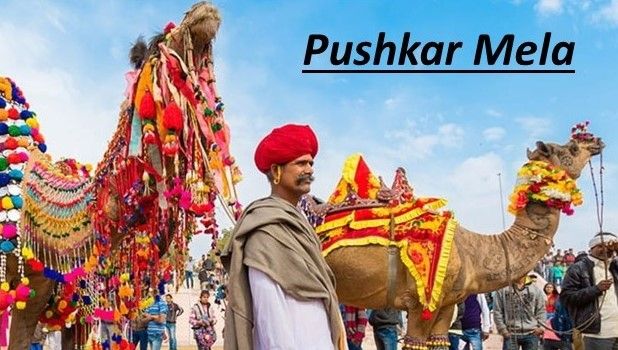
The Pushkar Mela, also known as Pushkar ka Mela, is one of India’s most celebrated cultural festivals. Held annually in the sacred town of Pushkar in Rajasthan, this twelve-day fair coincides with Kartika Purnima (October–November). Famous worldwide as the largest camel fair, it draws thousands of traders, pilgrims, and tourists, transforming the desert town into a vibrant hub of spirituality, commerce, and entertainment.
Mythological Roots of Pushkar Mela
The fair is not just A Spectacle of Trade and Festivity but is deeply rooted in Hindu mythology, making Pushkar a revered pilgrimage site.
- Brahma’s Worship: Pushkar is the only place in India where Lord Brahma, the Creator, is worshipped in a living temple.
- Legend of Vajra Nabha: Myth tells of a demon who killed Brahma’s children. Brahma slew him with a lotus stalk, and its petals gave rise to three sacred lakes — Jyeshtha, Madhyama, and Kanishtha.
- Gayatri and Savitri: During a yajna, Brahma married Gayatri when his wife Savitri was delayed. Angered, Savitri cursed him and withdrew to her hilltop shrine.
- Shraap-Mohini: To counter the curse, Brahma created another goddess, Shraap-Mohini, whose temple still faces Savitri’s shrine.
This mythological backdrop enriches the mela with spiritual depth, blending devotion with folklore.
Attractions of Pushkar Mela
The mela is a dazzling mix of trade, rituals, and entertainment, offering something for everyone:
- Camel Trading: The highlight of the fair, where camels are decorated, paraded, and sold. Traders from across Rajasthan and beyond participate in this grand exchange.
- Holy Bathing: On Kartika Purnima, devotees bathe in the sacred Pushkar Lake and worship at the Brahma temple, seeking salvation.
- Competitions: Fun contests like matka phod (pot breaking), moustache competitions, and bridal contests add a playful spirit.
- Cultural Performances: Folk music, dance, and colorful attire turn Pushkar into a carnival of traditions.
- Animal Shows: Horses, bullocks, and camels are showcased, adding rustic charm.
- Jal Puja: On the full moon night, devotees float lamps on the lake in memory of departed relatives, creating a mesmerizing spectacle.
Religious and Cultural Significance
The Pushkar Mela is more than a fair it is a spiritual journey. The presence of Brahma’s shrine, rare in India, makes Pushkar a sacred destination. A bath in the lake and worship at the temple are believed to grant moksha(salvation). Interestingly, Brahma’s idol exists only because Gayatri insisted that her shrine be accompanied by his, ensuring his worship continues here.
Every year, over two lakh people throng to Pushkar, blending devotion with festivity. The mela symbolizes Rajasthan’s cultural richness, where trade, tradition, and spirituality converge seamlessly.
Conclusion
The Pushkar Mela is a living tapestry of myth, devotion, and celebration. From its mythological roots to its bustling camel trade and vibrant cultural performances, it reflects The Essence of Rajasthan Heritage. While modern tourism has amplified its global appeal, the fair remains deeply tied to its spiritual origins, offering visitors both spectacle and sanctity.