
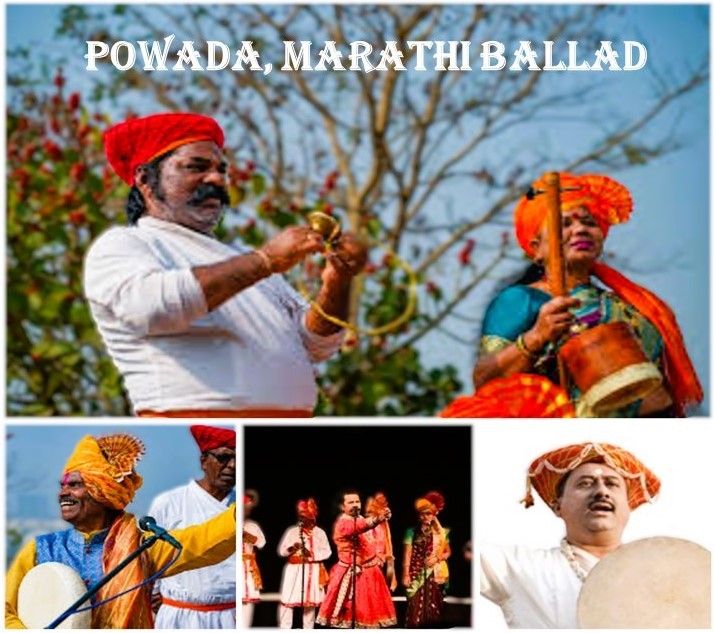
Powada is a distinctive and powerful genre of Marathi poetry that emerged in the late 17th century. These ballads, composed in a vigorous and inspiring style, narrate the heroic deeds of kings and warriors. They served not only as entertainment but also as a cultural record of valor, keeping alive the spirit of resistance and pride among the people. The creators and performers of Powadas, known as Shahirs, were poet-singers who brought history to life through their dramatic words and enactments.
Origins and Early Development
The tradition of Powada is believed to have roots in Vedic literature and bears resemblance to Birmal, Sung by the Charan Bhats of Rajasthan. It is thought that migrants from northern India introduced this form to Maharashtra during the reign of Chhatrapati Shivaji Maharaj.
The earliest Powadas were often composed by eyewitnesses of the events they described, which gave them authenticity and immediacy. Among the most famous is Afzal Khanacha Vadh (The Killing of Afzal Khan), composed by Agnidas in 1659, immortalizing Shivaji’s legendary encounter. Other notable works include Tanaji Malusare by Tulsidas, recounting the capture of Sinhagad Fort, and Baji Pasalkar by Yamaji Bhaskar. These compositions glorified Maratha bravery and instilled pride and unity among the people.
Flourishing in the Peshwa Era
During the Peshwa rule, Powada reached new heights. Renowned Shahirs such as Ram Joshi (1762–1812), Anant Phandi (1744–1819), Honaji Bala (1754–1844), and Prabhakar (1769–1843) enriched the tradition with their works. Their compositions expanded beyond military exploits to include social and cultural themes, reflecting the evolving society of their time.
By the late 19th century, efforts were made to preserve these oral traditions. Harry Arbuthnot Acworth and S. T. Shaligram collected around 60 Powadas, publishing them in 1891 under the title Itihas Prasiddha Purushanche Va Striyanche Powade. Later, ten of these were translated into English as Ballads of the Marathas (1894), introducing the genre to a wider audience.
Mahatma Phule and the Revival of Shivaji’s Legacy
Mahatma Jyotirao Phule played a pivotal role in reviving Shivaji’s memory through Powada. In 1869, he discovered and repaired Shivaji Maharaj’s samadhi and celebrated Shivaji Jayanti in Pune for the first time. Phule’s first book was a Powada dedicated to Shivaji, which British records acknowledge as a significant cultural contribution.
Form and Performance
A Powada is typically composed in 4 to 40 chauks(stanzas of 3–4 lines). The performance is highly theatrical:
- The lead presenter, dressed in angarakha, salwar, and a tall turban, plays the role of sutradhara (narrator and protagonist).
- He carries a halgi (tambourine) and is supported by companions called jhilkari, who enact minor roles and provide musical accompaniment.
- The performance begins with a prayer to Lord Ganesha, followed by a mix of poetry and prose narration.
Musical instruments such as dholak, dimdi, halgi, and the stringed tuntunaadd rhythm and energy. The language is simple, sometimes rustic, but always vigorous, evoking emotions ranging from heroism and devotion to pathos and romance.
Cultural Significance
Powadas are not limited to recounting battles; they also reflect social and political events, making them Dynamic Cultural Expressions. Traditionally performed in Tamasha folk dramas or at festivals, they remain a vibrant part of Maharashtra’s heritage. Communities like Gondhalis and Vaghyas, along with Shahirs, specialize in Powada singing, ensuring its continuity across generations.
Even today, Powadas retain their relevance. For instance, the Marathi film Me Shivajiraje Bhosale Boltoy (2009) featured Afzal Khanacha Vadh, reaffirming the enduring appeal of these ballads.