
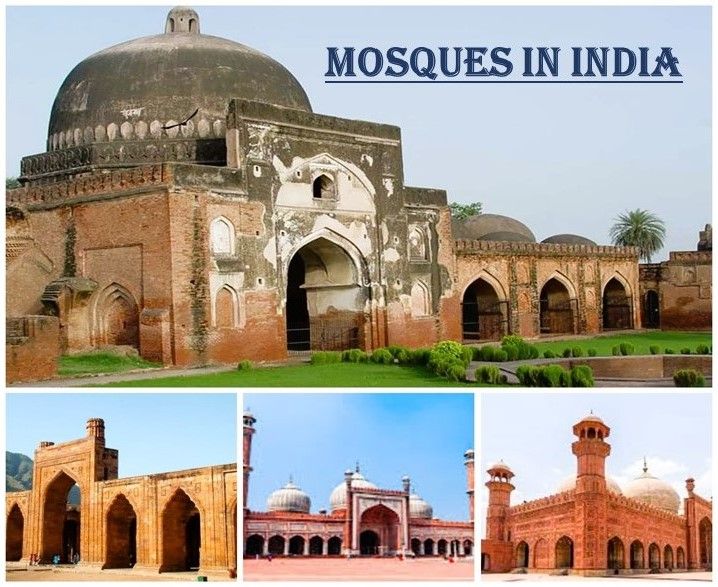
Northern India, with its rich cultural and religious diversity, is home to some of the most significant mosques in the country. These mosques are not only places of worship but also architectural marvels that reflect centuries of history, artistry, and devotion. Built across different dynasties and regions, they continue to serve as spiritual centers while attracting pilgrims and tourists alike.
Mosques of Punjab
Punjab boasts several notable mosques, each with unique historical and architectural significance. The Moorish Mosque in Kapurthala, built during the reign of Maharaja Jagatjit Singh, is modeled after The Grand Mosque of Morocco. Its inner walls are adorned with exquisite artworks from the Mayo School of Arts, Lahore, making it a rare blend of Islamic and local artistry. Another important mosque is the Mubarak Mosque in Qadian, established in 1882 by Mirza Ghulam Ahmad, the founder of the Ahmadiyya movement.
Mosques of Haryana
Haryana is home to a variety of mosques that reflect different eras of Islamic architecture. The Aliwardi Masjid, built nearly 200 years ago by Nawab Aliwardi Khan, stands near Gurgaon and remains a symbol of his legacy. The Humayun’s Mosque, constructed during the reign of the Mughal emperor Humayun, highlights early Mughal architectural features. The Kabuli Bagh Mosque in Panipat, built by Babur in 1526 after his victory over Ibrahim Lodi, is a landmark of Mughal conquest. Other notable mosques include the Lat ki Masjid, built by Feroz Shah Tughluq, showcasing stone pillars and floral motifs, and the Pathar Masjid, renowned for its fluted red sandstone minarets.
Mosques of Uttar Pradesh
Uttar Pradesh houses some of the most iconic mosques in India. The Bara Imambara in Lucknow, constructed in 1784 by Nawab Asaf-ud-Daulah, is both a mosque and a grand monument, famous for its labyrinth (Bhulbhulaiya). The Jama Masjid in Agra, built by Shah Jahan in 1648 in honor of his daughter Jahanara Begum, is one of the largest mosques in India. Jaunpur features the Atala Masjid (15th century) and Jami Masjid, both significant for their historical artifacts and Sharqi architectural style. The Gyanvapi Mosque in Varanasi, built by Aurangzeb, remains a prominent Mughal-era structure. Agra’s Moti Masjid, another Shah Jahan creation, is admired for its pristine white marble. The Sir Syed Masjid in Aligarh, located within Aligarh Muslim University, is a modern yet stunning example of Islamic architecture.
Mosques of Jammu and Kashmir
Jammu and Kashmir, where Islam has deep roots, is dotted with historic mosques. The Jama Masjid in Srinagar, built by Sultan Sikandar in 1400 AD, is the most significant mosque in the region, with its vast courtyard and wooden architecture. The Hazratbal Mosque, situated on the banks of Dal Lake, is revered for housing a relic believed to be a strand of Prophet Muhammad’s hair. The Charar-i-Sharief, built around 600 years ago, is another important spiritual site. Other notable mosques include the Baba Reshi Shrine, Ziarat Baba Buddan Shah, Patthar Masjid, Masjid of Akhund Mullah, and Khanqah-e-Mola, each contributing to the region’s spiritual and cultural richness.
Conclusion
The Mosques of Northern India are not just religious centers but also living monuments of history and art. From the Moorish-inspired mosque in Punjab to the Mughal marvels of Uttar Pradesh and the wooden elegance of Kashmiri mosques, each structure tells a story of faith, conquest, and cultural synthesis. Their continued preservation ensures that future generations can admire their architectural brilliance and spiritual significance.