
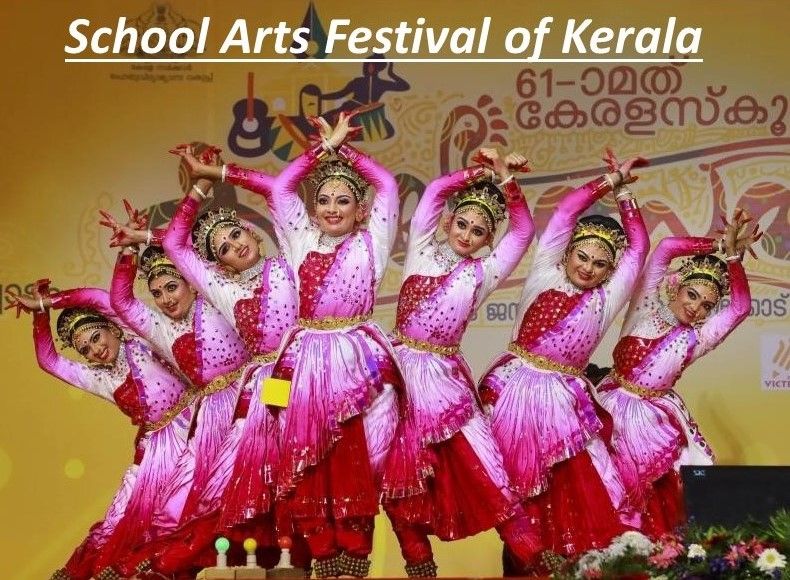
The Kerala School Arts Festival, popularly known as Kerala School Kalolsavam, is one of the largest student cultural gatherings in the world. Organized annually by the Government of Kerala, it brings together thousands of high school and higher secondary students to showcase their artistic brilliance. Internationally recognized, the festival is celebrated for its unique blend of regional traditions and cultural diversity, making it a vibrant symbol of Kerala’s artistic heritage.
Origins and Early Years
The festival traces its roots back to 1956 when Dr. C.S. Venkiteswaran, then Director of Public Instruction, was inspired by the Inter-University Festival in Delhi. He envisioned a similar platform for school students, leading to the first Kalolsavam at SRV High School, Ernakulam. The inaugural event was modest, with only 200 participants and a one-day schedule. Meals were served, and competitions were conducted directly at the school level.
By the late 1970s, the festival expanded to include Traditional Kerala Art Forms such as Kathakali music, Mohiniyattom, and Aksharaslokam, enriching the cultural fabric of the event.
Growth and Transformation
From its humble beginnings, the festival grew into a seven-day extravaganza with nearly 10,000 participants by 2008. Initially known as the Kerala State School Youth Festival, it was renamed the School Arts Festival of Kerala in 2008.
The event follows a multi-tiered structure:
- School-level competitions progress through sub-district and district levels before culminating at the state level.
- The Education Department manages the framework meticulously, guided by a manual drafted by cultural experts. This ensures transparency, fairness, and inclusivity, allowing students from diverse backgrounds to shine.
Unique Features
- Multi-level competition: Students refine their skills as they advance from school to state level.
- Government involvement: Strong political and administrative support ensures smooth organization.
- Food arrangements: Thousands of meals are prepared daily, reflecting Kerala’s hospitality.
- Cultural inclusivity: Traditional and modern art forms coexist, offering exposure to a wide spectrum of creativity.
Milestones
- 1975 (Calicut): Traditional art forms were formally included, and the proclamation rally was introduced.
- 2000: The Millennium Trophy featuring a dancing Nataraja was instituted. Titles like Kalathilakam and Kalaprathiba were discontinued to reduce unhealthy competition.
- 2008 onwards: The festival became more structured, with cash prizes, grace marks, and numerous trophies motivating students.
Cultural Impact
The festival is more than just a competition; it is a cultural movement. It nurtures young talent, preserves Kerala’s traditional art forms, and fosters unity among students from different districts. For many, it serves as a stepping stone to professional careers in arts, literature, and performance.
It also highlights Kerala’s commitment to education and culture. By providing a platform for thousands of students, the festival ensures that art and tradition remain integral to academic life.
Conclusion
The Kerala School Arts Festival stands as a testament to the state’s dedication to nurturing creativity and preserving cultural heritage. From 200 participants in 1956 to tens of thousands today, it has evolved into A Grand Spectacle of Talent and Tradition. With its unique organizational structure, inclusivity, and cultural richness, the festival continues to inspire generations of students, making Kerala a beacon of artistic excellence.