
Introduction
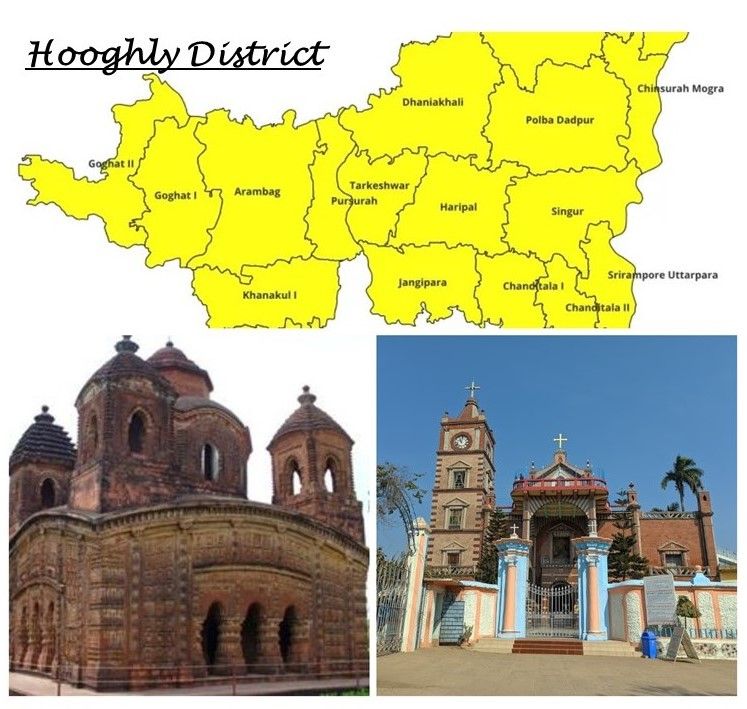
Hooghly District, nestled in the Burdwan division of West Bengal, is a region steeped in history and cultural richness. Its administrative headquarters is located at Chinsurah, a town that echoes the legacy of colonial and indigenous rule. The name "Hooghly" finds mention in ancient texts like Bipradash Piplai’s Manasamangal and the Mughal chronicle Ain-i-Akbari, suggesting its deep-rooted Indian origin. Linguistically, the name is believed to derive from “Hogla,” a tall reed that thrives along the riverbanks and marshy lowlands of the region.
History of Hooghly District
The Historical Journey of Hooghly dates back to ancient times when it was part of the Suhma kingdom, mentioned alongside Anga, Vanga, and Pundra in the Mahabharata. During the Mauryan era, it became part of Emperor Ashoka’s vast empire. Later, it was absorbed into the Gupta Empire following Samudragupta’s conquest in the 4th century CE. The region saw successive rule under Sasanka of Gaur, Harshavardhana, and the Sena dynasty before falling into the hands of the Mughals by the late 13th century.
Colonial powers began arriving in the 16th century, with the Portuguese establishing the first European settlement in Bengal at Hooghly. They built the Bandel Church in 1599, marking the beginning of Christian architecture in the region. The Dutch, Danes, French, and British followed, each leaving behind architectural and cultural imprints. Chandernagore remained under French control until 1950, while Chinsurah and Serampore were Dutch and Danish strongholds respectively.
Demography of Hooghly District
Hooghly is one of the most populous districts in West Bengal. The population is a blend of urban and rural communities, with a significant portion engaged in agriculture and industry. Bengali is the predominant language, with Hindi and English also spoken. The district has a balanced gender ratio and a literacy rate higher than the national average, reflecting its emphasis on education and social development.
Culture of Hooghly District
The cultural fabric of Hooghly is woven with threads of tradition, colonial influence, and spiritual heritage. The district is known for its terracotta temples, classical music, and folk traditions. Festivals like Durga Puja, Kali Puja, and Rath Yatra are celebrated with grandeur. The presence of multiple religious’ communities has fostered a spirit of harmony and inclusiveness.
Chandernagore, with its French legacy, hosts the Jagaddhatri Puja with elaborate lighting and processions. Kamarpukur and Jairambati, birthplaces of Sri Ramakrishna and Holy Mother Sarada Devi respectively, are spiritual hubs attracting devotees from across the globe.
Tourism of Hooghly District
Hooghly is a treasure trove for travelers seeking history, spirituality, and architectural marvels. Here are some of its most notable attractions:
Antpur
Located about 62 km from Kolkata, Antpur is famed for its 18th-century terracotta temples. The Radha-Govinda temple, built in the “atchala” style, showcases intricate carvings and a unique architectural layout with a “Jagamohan” mandap.
Bandel Church
One of the oldest Christian churches in Bengal, Bandel Church was built by Portuguese settlers in 1599. It remains a significant pilgrimage site and a symbol of colonial history.
Chandernagore
A former French colony, Chandernagore retains its European charm with the Strand promenade, French Institute, and colonial buildings. The town’s museum and heritage structures narrate tales of its unique past.
Kamarpukur
The birthplace of Sri Ramakrishna, Kamarpukur is a serene village with temples and ashrams dedicated to the saint. It offers a tranquil retreat for spiritual seekers.
Jairambati
Close to Kamarpukur, Jairambati is the birthplace of Sarada Devi. The village is dotted with temples and is a center for spiritual learning and meditation.
Tarakeswar
A prominent Shaivite pilgrimage site, Tarakeswar is known for its ancient temple dedicated to Lord Shiva. The temple attracts thousands of devotees, especially during the Shravan month.
Chinsurah
Once a Dutch settlement, Chinsurah boasts colonial-era buildings, churches, and the historic Dutch cemetery. The town’s riverside location adds to its scenic beauty.
Serampore
Serampore, formerly under Danish rule, is home to the Serampore College and several colonial structures. The town reflects a blend of European and Bengali architecture.
Economy of Hooghly District
Hooghly is one of the most economically advanced districts in West Bengal. Its economy is a balanced mix of agriculture and industry:
- Agriculture: About 70% of the population is engaged in farming. The fertile plains, nourished by the Hooghly and Damodar rivers, support the cultivation of rice, jute, potatoes, and vegetables. Orchard plantations also contribute significantly to the local economy.
- Industry: The district is a hub for jute manufacturing, with mills located in Tribeni, Bhadreswar, Champdani, and Sreerampur. The Bandel Thermal Power Plant and ITC’s Tribeni tissue plant are major industrial units. Although the Hindustan Motors plant in Uttarpara closed in 2014, the district continues to attract investment in manufacturing and services.
- Trade and Commerce: Historically a trading center, Hooghly maintains its commercial relevance through small-scale industries, handicrafts, and agricultural exports.
Conclusion
Hooghly District stands as a testament to Bengal’s layered history, cultural diversity, and economic resilience. From Ancient Kingdoms and colonial legacies to spiritual sanctuaries and industrial growth, the district offers a multifaceted experience for residents and visitors alike. Whether you're a history buff, a spiritual seeker, or a curious traveler, Hooghly welcomes you with open arms and stories etched in time.