
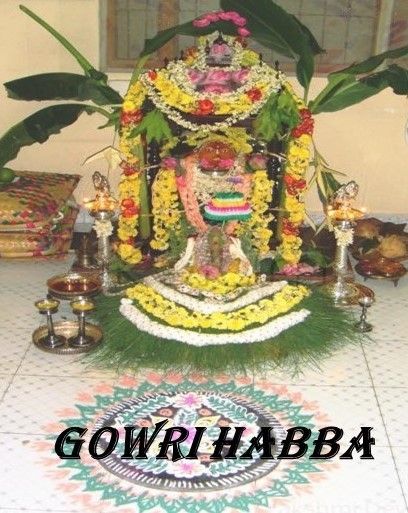
Gowri Habba is one of the most cherished festivals in southern India, observed with devotion and joy across Karnataka, Andhra Pradesh, Tamil Nadu, and Maharashtra, where it is popularly known as Hartalika. In Goa, it is celebrated as Bhaadrapada Shukla Paksha. This vibrant occasion honors Goddess Gowri, revered as the mother of Lord Ganesha and consort of Lord Shiva. According to Hindu belief, she is the incarnation of Aadhi Shakthi Mahamaya, embodying the divine energy of Lord Shiva.
Mythological Significance
Tradition holds that on The Third Day of the Month of Bhaadra, Goddess Gowri visits her parental home, symbolizing the warmth of a married daughter returning to her parents. The following day, Lord Ganesha arrives to escort her back to Kailasa. This touching narrative reflects familial affection and devotion, making Gowri Habba a festival that beautifully blends spirituality with cultural intimacy.
Swarna Gowri Vratha Rituals
The central ritual of Gowri Habba is the Swarna Gowri Vratha, performed to seek the blessings of the Goddess.
- Preparation: Married women bathe early, wear new clothes, and adorn young girls in the family.
- Sthapana: The symbolic idol of Gowri, called jalagauri or arishinadagauri, is made of turmeric or purchased as a decorated clay idol. It is placed on a plate filled with cereals, signifying prosperity.
- Mandapa Decoration: A canopy is built using banana stems and mango leaves, with the idol adorned in garlands and cotton decorations.
- Gauridaara: Women tie a sacred thread with sixteen knots on their right wrists, each knot worshipped with mantras.
- Baagina Offering: Five baaginas are prepared, containing turmeric, kumkum, bangles, beads, comb, mirror, coconut, blouse piece, grains, rice, pulses, wheat, and jaggery. One is offered to the Goddess, while the rest are distributed among married women.
Social and Cultural Customs
Beyond rituals, Gowri Habba emphasizes family bonds and community ties:
- Tavaru Maneyavaru: Parents and brothers of married women send gifts, money, and festive items to their daughters’ households.
- Newly Married Girls: They prepare sixteen jothe baaginas for married women (sumangalis) and seek their blessings.
- Family Gatherings: Newlywed couples are invited to their in-laws’ homes and served elaborate meals.
- Belief on Conception: It is believed that children conceived during Gowri Habba, which falls in winter, are born in summer and thus less prone to infections.
Cultural Significance
Gowri Habba is not merely a religious observance but a celebration of feminine power, marital harmony, and family unity. The Rituals Symbolize Purity, prosperity, and devotion, while the customs strengthen social bonds. Importantly, the festival precedes Ganesh Chaturthi, making it an integral part of the festive season in southern India.
By honoring Goddess Gowri, devotees reaffirm their faith in the divine feminine energy that sustains life and nurtures families. Gowri Habba thus remains a cherished tradition, blending spirituality with cultural richness, and continues to inspire devotion across generations.