
Introduction
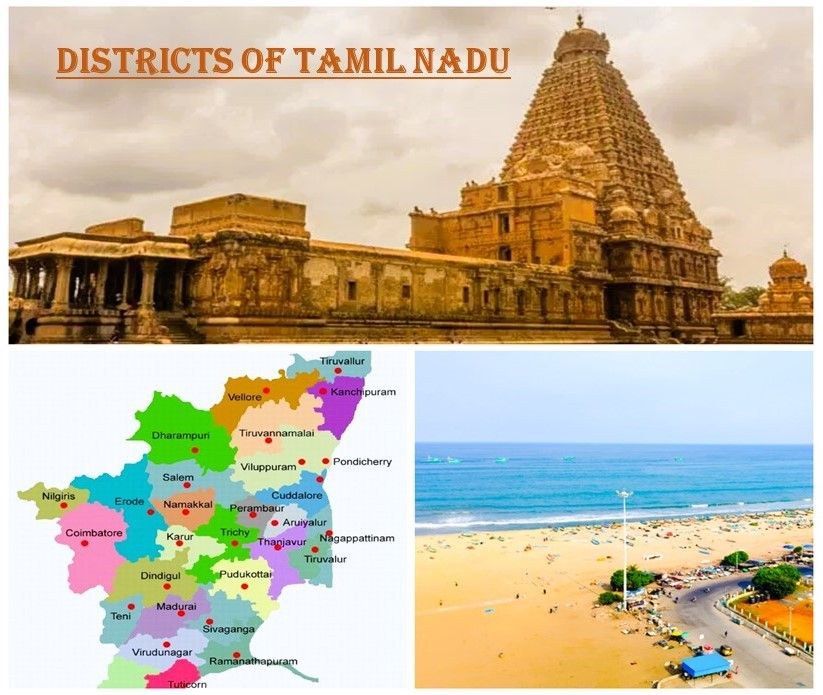
Tamil Nadu, one of the 28 states of India, is located at the southernmost tip of the Indian peninsula. It ranks 11th in area and 7th in population among Indian states. Known for its rich cultural heritage, Tamil Nadu has been a cradle of classical arts like Bharatanatyam and Carnatic music. The state is also renowned for its exquisite handicrafts made from wood, stone, and metal. Its forests yield valuable products such as sandalwood, timber, and fuelwood, while its fertile lands produce crops like sugarcane, groundnut, potatoes, and various spices. Tamil Nadu is administratively divided into 32 districts, each with its own unique features and contributions to the state’s identity.
Overview of Districts
Chennai District
The Capital City of Tamil Nadu, Chennai is a bustling metropolis and a major economic and cultural hub. It is known for Marina Beach, Fort St. George, and its thriving IT and automobile industries.
Cuddalore District
Located along the Bay of Bengal, Cuddalore is famous for its temples, beaches, and historical significance. Agriculture and fishing are the main occupations here.
Kancheepuram District
Often referred to as the "City of Thousand Temples," Kancheepuram is a spiritual center and renowned for its silk sarees and ancient architecture.
Tiruvallur District
Tiruvallur is a mix of urban and rural landscapes, with industries, temples, and agricultural fields. It is also home to Pulicat Lake, a bird sanctuary.
Tiruvannamalai District
This district is famous for the Arunachaleswarar Temple and the sacred Annamalai hills. It attracts spiritual seekers from around the world.
Vellore District
Vellore is known for its historic fort, Christian Medical College, and VIT University. It has a strong presence in education and healthcare.
Viluppuram District
Viluppuram is largely agricultural, with rice, sugarcane, and groundnut being major crops. It also has several ancient temples and heritage sites.
Ariyalur District
Ariyalur is rich in limestone deposits and is a hub for cement industries. It also has archaeological sites dating back to the Chola period.
Nagapattinam District
A coastal district, Nagapattinam is known for its fishing industry, religious sites like Velankanni Church, and its role in maritime trade.
Perambalur District
Perambalur is a small district with a focus on agriculture and cement production. It is also known for its historical temples.
Thanjavur District
Thanjavur, the cultural capital of Tamil Nadu, is famous for the Brihadeeswarar Temple, Tanjore paintings, and classical music.
Tiruchirapalli District
Also known as Trichy, this district is a blend of tradition and modernity. It houses the Rockfort Temple and is a major educational center.
Karur District
Karur is a textile hub, especially known for home furnishings and exports. It also has a strong agricultural base.
Tiruvarur District
Tiruvarur is the birthplace of Carnatic music legends and is known for its temples and cultural heritage.
Dharmapuri District
Located in the northwestern part of the state, Dharmapuri is known for its mango cultivation and scenic beauty.
Krishnagiri District
Krishnagiri is rich in granite resources and is a major producer of mangoes. It also has several hill stations and trekking spots.
Namakkal District
Namakkal is known for poultry farming, transport businesses, and its rock-cut temples.
Salem District
Salem is a major industrial district with steel plants, textile units, and mango cultivation. It also has scenic hills and temples.
Tiruppur District
Tiruppur is the knitwear capital of India, exporting garments worldwide. It plays a vital role in Tamil Nadu’s economy.
Coimbatore District
Known as the "Manchester of South India," Coimbatore is a major industrial and educational center, famous for textiles, engineering, and IT.
Madurai District
Madurai is one of the oldest cities in India, centered around the Meenakshi Amman Temple. It is A Cultural and Religious Hub.
Theni District
Theni is a picturesque district with hills, waterfalls, and plantations. It is known for cardamom and coffee cultivation.
Dindigul District
Dindigul is famous for its locks, leather products, and the scenic Kodaikanal hill station.
Sivaganga District
Sivaganga is known for its rich history, temples, and agriculture. It has a strong presence in traditional crafts.
Virudhunagar District
Virudhunagar is a major center for fireworks and matchbox industries. It also has a vibrant trading community.
Ramanathapuram District
This coastal district is home to Rameswaram, a major pilgrimage site. Fishing and marine activities dominate the economy.
Tirunelveli District
Tirunelveli is known for its halwa, temples, and the scenic Courtallam waterfalls. It has a mix of agriculture and industry.
Tuticorin District
Also known as Thoothukudi, this district is a major port city with salt pans, fishing, and shipping industries.
Kanyakumari District
The southernmost tip of India, Kanyakumari is famous for its sunrise views, Vivekananda Rock Memorial, and confluence of three seas.
Pudukkottai District
Pudukkottai is rich in archaeological sites, temples, and historical monuments. Agriculture is the mainstay of its economy.
Conclusion
Tamil Nadu’s 32 districts reflect the diversity and richness of the state’s geography, culture, and economy. From bustling urban centers like Chennai and Coimbatore to serene hill stations like Kodaikanal and spiritual towns like Rameswaram, each district contributes uniquely to the state’s identity. Whether you're a traveler, historian, or entrepreneur, Tamil Nadu offers a mosaic of experiences that are deeply rooted in tradition yet dynamically evolving with time.