
Introduction
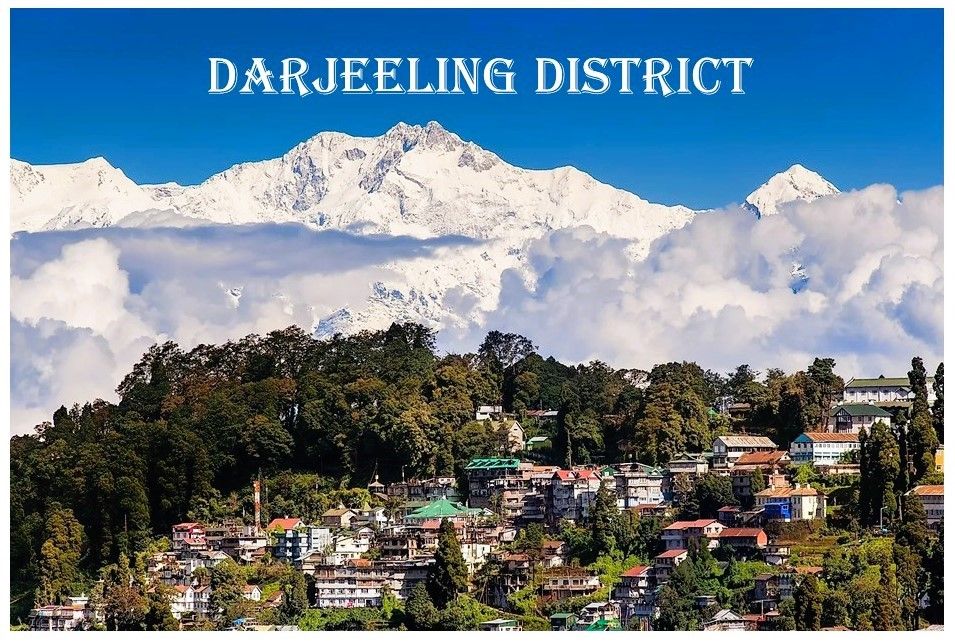
Nestled in the lap of the Eastern Himalayas, Darjeeling district in West Bengal is often hailed as the “Queen of the Hills.” Its breathtaking landscapes, cool climate, and colonial charm have captivated travelers for centuries. The district is synonymous with lush tea gardens, panoramic views of Mount Kanchenjunga, and the iconic Darjeeling Himalayan Railway. Beyond its Natural Beauty of Darjeeling is a melting pot of cultures, traditions, and communities, making it a unique destination for both tourism and cultural exploration.
Location of Darjeeling District
Darjeeling district is located in the northernmost part of West Bengal, India. It shares borders with Sikkim to the north, Nepal to the west, and Bhutan to the east. The district acts as a gateway to the northeastern states and is strategically positioned in the foothills of the Himalayas. Its proximity to international borders adds to its geopolitical and cultural significance.
History of Darjeeling District
The name “Darjeeling” originates from the Tibetan words “Dorje” (thunderbolt) and “Ling” (place), meaning “Land of the Thunderbolt”. Historically, the region was under the rule of the Chogyal of Sikkim until the late 18th century, when it was annexed by the Gorkhas of Nepal. Following the Anglo-Gorkha War in 1814, the British East India Company gained control of the area through the Treaty of Sugauli in 18152. In 1835, the British established a sanatorium in Darjeeling, which later evolved into a prominent hill station and tea-producing region. The district played a vital role during colonial times and continues to be a symbol of British legacy in India.
Geography of Darjeeling District
Darjeeling’s geography is characterized by steep hills, deep valleys, and dense forests. The district lies between 26°31′ and 27°13′ N latitude and 87°59′ and 88°53′ E longitude. It can be broadly divided into two regions: the hilly terrain and the Terai plains. The hilly region falls under the jurisdiction of the Gorkhaland Territorial Administration (GTA), which includes Darjeeling, Kurseong, and Mirik subdivisions. The plains, known as the Terai, are part of the Siliguri subdivision. The region’s elevation ranges from 100 meters to over 3,000 meters above sea level, offering diverse flora and fauna.
Subdivisions of Darjeeling District
Darjeeling district comprises four main subdivisions:
- Darjeeling: The district headquarters and the most popular tourist destination.
- Kurseong: Known for its educational institutions and tea gardens.
- Mirik: A serene town centered around Sumendu Lake.
- Siliguri: A bustling commercial hub located in the plains.
Kalimpong was formerly a subdivision of Darjeeling but became a separate district in 2017.
People of Darjeeling District
The people of Darjeeling are known for their warmth and hospitality. The district is home to a diverse population including Gorkhas, Lepchas, Bhutias, Bengalis, and Tibetans. Nepali is the most widely spoken language, followed by Bengali, Hindi, and English. The community is largely agrarian, with many involved in tea cultivation, tourism, and small-scale trade.
Culture of Darjeeling District
Darjeeling’s culture is a vibrant blend of Indian and Himalayan traditions. Festivals like Dasain, Tihar, Losar, and Buddha Jayanti are celebrated with enthusiasm. Traditional dances such as Maruni and Tamang Selo, along with folk music, are integral to the local heritage. The influence of British colonialism is evident in the architecture, schools, and lifestyle of the people.
Religion of Darjeeling District
The district is religiously diverse. Hinduism is the predominant faith, followed by Buddhism and Christianity. Numerous monasteries, temples, and churches dot the landscape, reflecting the spiritual harmony of the region. The Mahakal Temple, Ghoom Monastery, and St. Andrew’s Church are notable religious landmarks.
Tourism of Darjeeling District
Tourism is the lifeblood of Darjeeling’s economy. Key attractions include:
- Tiger Hill: Famous for sunrise views over Kanchenjunga.
- Darjeeling Himalayan Railway: A UNESCO World Heritage Site.
- Batasia Loop: A scenic railway loop with a war memorial.
- Peace Pagoda: A symbol of unity and tranquility.
- Tea Gardens: Visitors can tour estates and sample world-renowned Darjeeling tea.
Adventure seekers can indulge in trekking, paragliding, and mountain biking. The district also offers eco-tourism and homestay experiences for immersive travel.
Education in Darjeeling District
Darjeeling has a rich educational legacy, with institutions dating back to the colonial era. Schools like St. Paul’s, Loreto Convent, and Mount Hermon are renowned across India. The district also hosts colleges affiliated with the University of North Bengal. Kurseong and Darjeeling are particularly known for their academic environment, attracting students from across the country.
Economy of Darjeeling District
The economy of Darjeeling is primarily driven by:
- Tea Industry: Darjeeling tea is globally acclaimed for its flavor and aroma.
- Tourism: A major source of income and employment.
- Agriculture: Crops like cardamom, ginger, and oranges are cultivated.
- Handicrafts: Woolen garments, wood carvings, and traditional jewelry contribute to the local economy.
The district also benefits from cross-border trade due to its proximity to Nepal, Bhutan, and Sikkim.
Darjeeling district is more than just a picturesque hill station it’s a cultural mosaic, A Historical Landmark, and a thriving economic zone. Whether you're sipping tea with a view of the Himalayas or exploring its colonial past, Darjeeling offers an experience that’s both timeless and transformative.