
Introduction
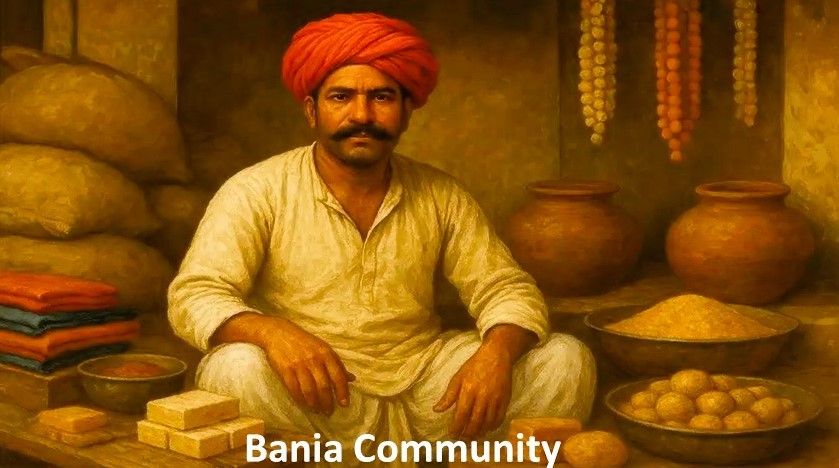
The Bania community, traditionally known for its mercantile and trading occupations, has a rich cultural legacy reflected in its costumes and adornments. Their attire is not only a marker of identity but also a symbol of social status, tradition, and regional diversity. Colourful clothing, elaborate jewellery, and distinctive turbans form the essence of their dress, varying across regions such as North Gujarat, Kathiawar, Surat, and Kutch.
Men’s Attire
Men of the Bania Community typically wear a dhoti, which is a long piece of cloth tied around the waist and legs, symbolizing simplicity and tradition. Over this, they wear a jacket called Badan or a cotton coat known as Angrakha, which provides both comfort and elegance. A shoulder cloth called Pichodi completes the ensemble, often draped gracefully to signify respectability.
Regional variations are particularly striking in turbans. In Kutch District and Kathiawar, men wear large Rajputana-style turbans, which are expansive and regal in appearance. In contrast, men from North and Central Gujarat prefer tightly folded cylindrical turbans, characterized by numerous folds in the front and several coils at the back. These turbans are not merely functional but also serve as symbols of pride and identity.
Jewellery is another important aspect of men’s attire. Affluent men often wear a silver girdle and a gold armlet above the elbow. As wealth increases, so does the quantity and quality of jewellery, making adornment a visible marker of prosperity.
Women’s Attire
Women of the Bania community are equally distinguished by their costumes and ornaments. Their clothing is vibrant, often reflecting regional textile traditions. Sarees and lehengas in bright colours and intricate designs are common, with fabrics ranging from cotton to silk depending on the occasion.
Jewellery plays a central role in women’s attire. They wear gold ornaments often set with pearls, symbolizing both beauty and affluence. Earrings, nose-rings, and necklaces are essential adornments, while armlets worn above the left elbow add to the elegance. Bangles made of glass and ivory are worn in abundance, reflecting both tradition and femininity. Silver anklets and toe-rings complete the look, making jewellery an inseparable part of their cultural identity.
Cultural Significance
The costumes of the Bania community are not merely decorative; they embody cultural values and social traditions. Clothing and jewellery serve as markers of community identity, distinguishing Banias from other groups. They also reflect social hierarchy, as wealthier families display their prosperity through more elaborate attire and ornaments.
The fondness for jewellery among both men and women highlights the community’s mercantile background, where wealth accumulation and display are intertwined with cultural practices. Jewellery is often passed down generations, becoming part of the family legacy and symbolizing continuity of tradition.
Historical and Social Context
Historically, the Bania community has been associated with trade, finance, and commerce. Their costumes reflect this heritage, blending practicality with opulence. The dhoti and Angrakha symbolize simplicity and discipline, while the jewellery and turbans signify prosperity and pride.
Over time, these costumes have evolved but continue to retain their traditional essence. Even today, during festivals, weddings, and community gatherings, Banias proudly wear their traditional attire, reinforcing their cultural heritage and social bonds.
Legacy and Traditions
The legacy of Bania costumes lies in their ability to preserve cultural identity across generations. Despite modernization, traditional attire remains significant during rituals and ceremonies. The costumes embody values of modesty, prosperity, and respect for tradition, making them an integral part of the community’s cultural fabric.
Conclusion
The Costumes of the Bania Community are a vibrant blend of tradition, regional diversity, and social symbolism. From the dhoti and Angrakha of men to the ornate jewellery of women, every element reflects their cultural richness. Rooted in history and sustained by tradition, these costumes continue to be a proud expression of the Bania community’s identity, legacy, and way of life.