
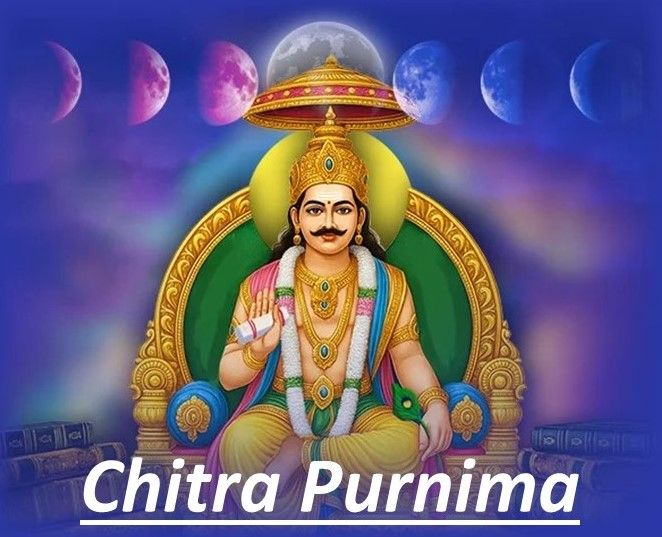
Chitra Purnima is one of the most spiritually profound festivals in Hinduism, observed on the full moon day of the Chaitra month (March–April). This sacred occasion is dedicated to the Chitra Guptas, celestial beings believed to maintain an invisible record of every individual’s deeds. The festival beautifully blends mythology, ritual, and moral reflection, reminding devotees of the divine presence that constantly watches over human actions.
Mythological Background
The term Chitra Gupta translates to “Hidden Picture,” symbolizing the unseen record of one’s good and bad deeds. In Hindu Belief, these deities serve as assistants to Yama, the god of death, who evaluates the moral balance of human lives. Worshipping them on Chitra Purnima is thought to soften their judgment and inspire individuals to live virtuously.
A famous legend connects the festival to Indra, king of the gods. When Indra disobeyed his Guru Brihaspati, he committed many sins during the Guru’s absence. Seeking redemption, Indra undertook a pilgrimage and discovered a Shiva Lingam near Madurai. Miraculously, golden lotuses appeared for his worship, and his sins were absolved. This event occurred on Chitra Purnima, establishing the day’s sanctity and linking it forever with themes of repentance and renewal.
Rituals and Worship
On Chitra Purnima, devotees perform elaborate rituals to honor the Chitra Guptas. The deity is invoked in an image or a kalasa(a vessel filled with water) and worshipped with incense, camphor, flowers, and sacred chants. A special offering of spiced rice is prepared and distributed as prasad. The rituals often conclude with a fire ceremony (homa), symbolizing purification and the burning away of past misdeeds.
Psychological and Social Significance
Beyond its ritualistic aspects, Chitra Purnima carries profound psychological meaning. Observing the festival reminds devotees of the higher power that constantly monitors their conduct. The belief that Chitra Guptas reside within one’s shoulders serves as a moral compass, encouraging individuals to engage in righteous deeds.
Socially, the festival fosters harmony and compassion. Feeding Brahmins, the poor, and the needy is considered an essential part of the observance. Acts of charity performed on this day are believed to bring blessings and spiritual merit, reinforcing the value of generosity in society.
Lessons from the Festival
The story of Indra highlights the importance of humility, repentance, and obedience to one’s Guru. Chitra Purnima teaches that sincere prayer, contrition, and a resolve to avoid wrongdoing can absolve sins. It reinforces the Hindu emphasis on self-discipline, moral accountability, and devotion.
Cultural Importance
Chitra Purnima is celebrated with great fervor in South India, especially near Madurai, where Indra’s legend is rooted. Temples witness special rituals, and communities come together in collective worship. The festival bridges mythology with everyday life, reminding society of the eternal values of truth, charity, and devotion.
Conclusion
Chitra Purnima is not merely a religious observance but A Profound Cultural Tradition that integrates mythology, ritual, and moral reflection. It urges individuals to live with integrity, compassion, and devotion, while strengthening the bonds of community and faith. In essence, the festival is a reminder that every action leaves an imprint, and living virtuously ensures peace in both this life and the hereafter.