
Introduction
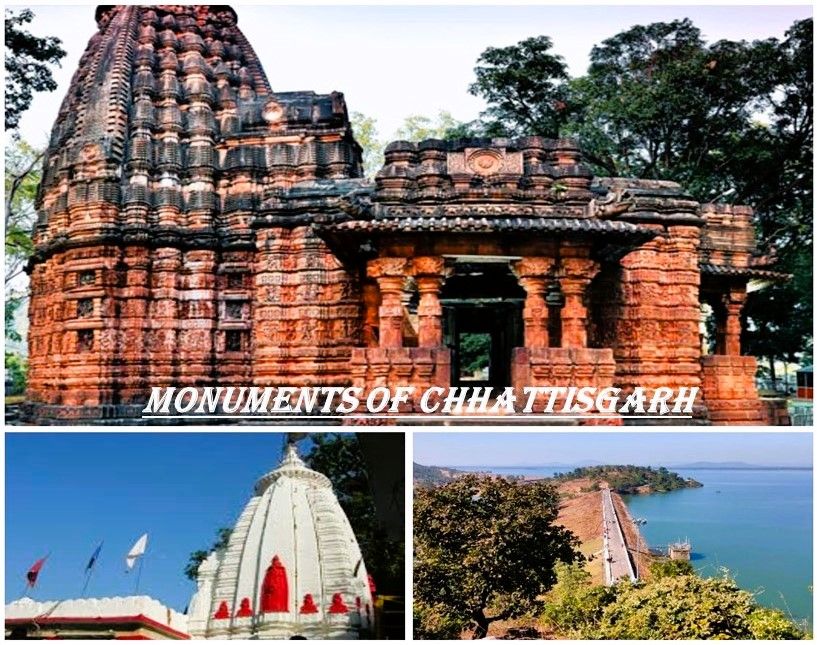
Chhattisgarh, often celebrated as the “land of heritage and culture,” is a treasure trove of India’s architectural brilliance and historical depth. Across its diverse landscapes lie forts, palaces, temples, and mosques that narrate stories of dynasties, devotion, and artistry. These Monuments embody centuries of craftsmanship and spiritual traditions, making the state a living museum of India’s past. Iconic landmarks such as Ratanpur Fort, Kawardha Palace, Bhoramdeo Temple, and the Khadia Dam stand as enduring testaments to its glorious legacy, attracting travelers, historians, and culture enthusiasts from around the world.
Historical Monuments of Chhattisgarh
The historical wealth of Chhattisgarh is spread across regions like Bilaspur, Durg, Dantewada, Bastar, Raipur, Raigarh, and Kawardha. Bilaspur, known as India’s first artificially planned hill station, is home to several forts including Malhar, Ratanpur, Ajmergarh, Kashigarh, Kotagarh, and Kotmi. Among these, Malhar Fort holds special significance, dating back nearly 2000 BCE. Surrounded by rivers, it served as a strategic stronghold and is renowned for inscriptions and relics that reveal the sophistication of early civilizations. Many of these monuments were built with bricks and bear Pali inscriptions on Jasper slabs, showcasing the ingenuity and artistry of ancient builders.
Palaces and Forts
The palaces and forts of Chhattisgarh stand as majestic reminders of royal legacies and colonial influences. The Bastar Palace, constructed in the 14th century, gleams in white and symbolizes the valor of the Bastar dynasty. Kanker Palace, reconstructed in 1937, reflects colonial architectural styles and once served as the residence of the British Agent during the Raj. Kawardha Palace, built between 1936 and 1939 on the scenic Maikal Hill, now serves as a heritage destination, offering visitors a glimpse into regal lifestyles. Forts such as Ratanpur and Chaithurgarh further enrich the state’s historical landscape. Chaithurgarh Fort, protected by the Archaeological Survey of India, is considered one of India’s strongest natural forts. It houses the Mahishasur Mardini temple, notable for its twelve-armed idol, blending mythology with architectural brilliance.
Temples of Chhattisgarh
Temples form the spiritual backbone of Chhattisgarh’s cultural identity. The Mahamaya Temple in Ambikapur, dating back to the Kalchuri era, is dedicated to Goddess Mahamaya, an incarnation of Durga. Its idol, believed to belong to the 2nd or 3rd century, adds immense historical value. The Vishnu Temple of Janjgir, built in the 12th century by the Hayhay Vansh kings, remains incomplete but showcases exquisite craftsmanship. The Bhoramdeo Temple near Raipur, dedicated to Lord Shiva, is a complex of four temples dating back to the 10th–12th centuries. The Laxman Temple in Sirpur, built between 625–650 AD, is considered one of India’s finest brick temples, adorned with carvings depicting Vishnu, Krishna Leela, and Vaishnava symbols. Other notable temples include the Devrani-Jethani Temples of the 5th–6th century, the Mama Bhanja Temple dedicated to Shiva, and the Mahadev Temple in Bilaspur. Each of these sacred sites reflects the devotion and artistry of the communities that built them.
Religious and Cultural Heritage
Chhattisgarh’s monuments also highlight its diverse religious traditions. The Jod Gumbaz in Bijapur, twin mosques built in 1687, commemorate Khan Muhammad and Abdul Razzaq Qadiri. Their elevated tombs and domed galleries showcase the finesse of Islamic architecture. The Mama Bhanja Temple, steeped in legend, is said to have been constructed in a single day by an uncle-nephew duo, adding a mystical charm to the region’s heritage. Together, these monuments whether Hindu temples, Islamic mosques, or colonial palaces illustrate the cultural mosaic of Chhattisgarh and its historical depth.
Conclusion
The monuments of Chhattisgarh are not merely architectural marvels; they are living chronicles of The State Glorious Past. They embody the valor of dynasties, the devotion of communities, and the artistry of craftsmen. From forts like Ratanpur and Chaithurgarh to temples like Bhoramdeo and Laxman, and palaces like Bastar and Kawardha, each monument enriches the cultural fabric of the state. For travelers and history enthusiasts, exploring these sites is akin to walking through the pages of history, where every stone whispers tales of heritage, spirituality, and timeless beauty.