
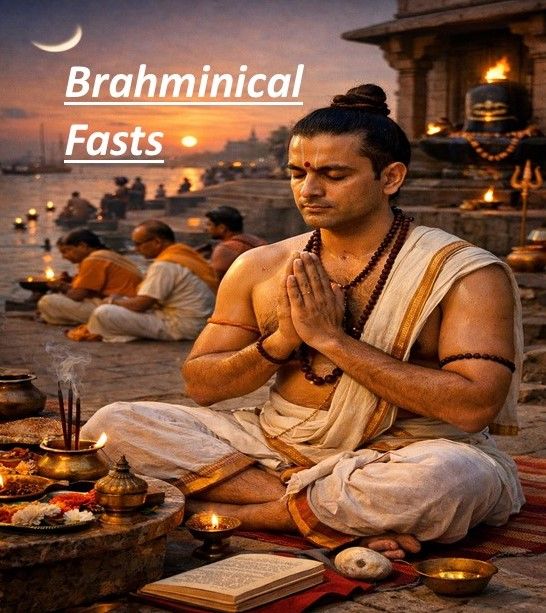
Fasting has always been a cornerstone of Hindu religious practice, and for Brahmins, it is regarded as a sacred duty. From the moment a Brahmin assumes the yajnopavita or triple cord, fasting becomes an inseparable part of spiritual discipline. These observances are not occasional but frequent, often requiring prolonged abstinence, and are expected to be followed regardless of age or health, unless illness is severe. The practice symbolizes purification, self-restraint, and unwavering devotion to the divine.
Daily Meals and Ritual Exceptions
A Brahmin householder (grahastha) typically consumes two meals daily one after midday and another before retiring at night. Yet, this routine is frequently interrupted by fasting obligations. On certain days, only one meal is permitted, usually in the afternoon, while on others, complete abstinence from food and drink is required.
Lunar Calendar Observances
The lunar cycle plays a central role in determining fasts. Both The New Moon (amavasya) and full moon (purnima) are designated fast-days. Additionally, the tenth, eleventh, and twelfth days of each lunar fortnight are observed with fasting. The eleventh day, known as ekadasi, is especially revered. On this day, Brahmins abstain from all food, believing the fast carries immense spiritual merit and purifies the soul.
Shivaratri and Sacred Festivals
The thirteenth lunar day is considered inauspicious. Brahmins refrain from eating until sunset, after which they perform pujato Lord Shiva before partaking of food. The most significant observance is Maha Shivaratri, celebrated on the fourteenth day of Magha (February). Devotees fast for a full twenty-four hours, abstaining from food, drink, and even sleep, while offering worship to Shiva every three hours.
Other festivals also demand fasting. The ninth day of Chaitra (April) marks Rama Navami, the birth of Lord Rama. On this day, Brahmins eat only once, avoiding rice, and instead consuming peas, coconuts, bananas, and cakes. The eighth day of Sravana (August) commemorates Krishna’s birth (Janmashtami). Complete fasting is observed, with midnight worship of Krishna and his consorts, accompanied by offerings of fruits, milk, and sweets.
Avatars and Cosmic Alignments
Brahmins also fast on anniversaries of The Ten Avatars of Vishnu. Days such as manuvadi, yugadi, sankranti, eclipses, equinoxes, solstices, and planetary conjunctions are marked by fasting. These cosmic events are believed to hold spiritual significance, and abstinence during them is seen as aligning oneself with universal rhythms.
Personal and Weekly Rituals
Fasting is also observed on personal occasions, such as the anniversaries of parents’ deaths, as well as on Sundays and other designated days. Ritual restrictions accompany fasting: men abstain from oiling their hair, women avoid saffron cosmetics, and marital intimacy is forbidden. Interestingly, Wednesday and Saturday are considered favorable for grooming practices, unlike other days.
Discipline and Adaptation
Despite the rigor of these fasts, Brahmins seldom view them as burdensome. From childhood, they are trained to delay meals until after midday, making abstinence a natural habit. Moreover, when fasts conclude, meals are often hearty, compensating for the period of restraint.
Cultural and Spiritual Significance
Brahminical fasts extend beyond dietary discipline. They embody devotion, cosmic harmony, and moral purification. These observances reinforce the rhythm of religious life, binding individuals to their community and tradition. Through fasting, Brahmins cultivate endurance, humility, and spiritual focus, ensuring that their daily existence remains deeply intertwined with the sacred.