
Introduction
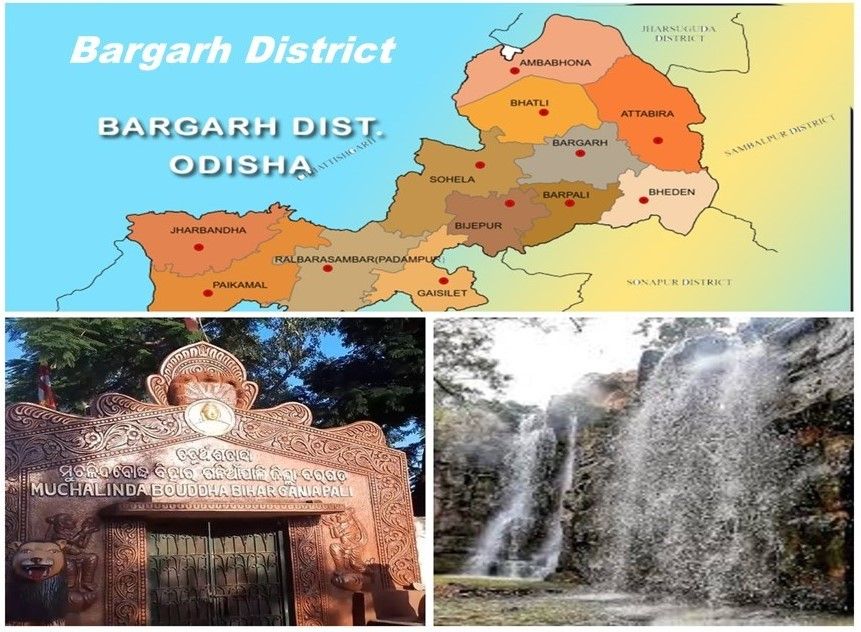
Bargarh district, also spelled Bargarh, is nestled in the westernmost part of Odisha, India. Known for its rich cultural heritage, agricultural prosperity, and industrial development, Bargarh stands as one of the most dynamic districts in the state. The district headquarters is located in The Town of Bargarh, and the local language spoken is Sambalpuri a dialect of Odia that reflects the region’s unique identity.
With a population of approximately 1,345,601 and a density of 231 people per square kilometer, Bargarh is administratively divided into seven tehsils and two subdivisions. The district is home to the Hirakud Irrigation Project, which supports its thriving agricultural sector. Additionally, industries such as the Sambalpuri handloom, sugar factories, and cement plants contribute significantly to its economy.
Location of Bargarh District
Bargarh is bordered by the districts of Sambalpur to the east, Nuapada to the south, and the state of Chhattisgarh to the west. Its geographical coordinates are approximately 21.33°N latitude and 83.62°E longitude. The district spans an area of 5,837 square kilometers, encompassing fertile plains, forested hills, and river valleys.
History of Bargarh District
Medieval History
Historically, Bargarh was part of the ancient kingdom of Dakshina Kosala, which included parts of present-day western Odisha and Chhattisgarh. The region was ruled by various dynasties, including the Chedis and the Somavamshis. It is believed that Kharavela, the famous emperor of Kalinga, had ancestral ties to Dakshina Kosala.
Buddhism in Bargarh
Bargarh has significant Buddhist heritage, particularly around the Gandhamardan Hills. These hills are home to ancient Buddhist monasteries and relics, indicating that the region was once a thriving center of Buddhist learning and spirituality. The archaeological remains suggest influence from Mahayana and Vajrayana traditions.
Modern History
In the post-independence era, Bargarh gained administrative recognition when it was carved out of Sambalpur district on April 1, 1993. The district played a role in India’s freedom movement and has hosted visits from national leaders like Jawaharlal Nehru and Vinoba Bhave.
Geography of Bargarh District
The district features a mix of plains and hilly terrain, with the Gandhamardan Hills forming a prominent natural landmark. The Mahanadi River and its tributaries irrigate the land, making it ideal for agriculture. The climate is tropical, with hot summers reaching up to 46°C and mild winters dipping to around 10°C.
Culture of Bargarh District
Bargarh is renowned for its vibrant cultural traditions. The most iconic event is the Dhanu Yatra, an 11-day open-air theatrical festival that re-enacts episodes from the Mahabharata, particularly the story of Lord Krishna and King Kansa. The entire town transforms into a stage, with residents actively participating in the drama.
The district is also famous for its Sambalpuri textiles, which are handwoven and feature intricate patterns. These fabrics are not just garments but symbols of regional pride and craftsmanship.
Economy in Bargarh District
Agriculture is the backbone of Bargarh’s economy. The Hirakud Irrigation Project enables large-scale cultivation of paddy, sugarcane, and pulses. The district is often referred to as the Rice Bowl of Odisha.
Industrial development includes:
- Sambalpuri Handloom Industry: A major source of employment and export.
- Sugar Factories: Supporting agro-based industries.
- Cement Plants: Contributing to infrastructure development.
Trade and commerce thrive in Bargarh due to its strategic location and connectivity with neighboring states.
Education in Bargarh District
Bargarh has a growing educational infrastructure, with institutions ranging from primary schools to colleges offering undergraduate and postgraduate programs. The district promotes education in both Odia and English, and literacy rates are steadily improving, currently standing at around 75.16%.
Tourism in Bargarh District
Bargarh offers a diverse tourism experience, Blending Spirituality, nature, and rural charm.
Pilgrimage Tourism
- Nrusinghanath Temple: Located near the Gandhamardan Hills, this temple is dedicated to Lord Vishnu and attracts thousands of devotees.
- Chaldhar Waterfall and Temples: Sacred sites nestled in nature.
Nature Tourism
- Gandhamardan Hills: Rich in biodiversity and medicinal plants, ideal for trekking and eco-tourism.
- Debrigarh Wildlife Sanctuary: A haven for wildlife enthusiasts.
Village Tourism
Visitors can explore traditional villages to experience Sambalpuri culture, folk music, and local cuisine. Handloom weaving demonstrations and agricultural tours offer immersive experiences.
Visiting Information
Bargarh is accessible via road and rail. The nearest airport is in Raipur, Chhattisgarh. Local transport includes buses, taxis, and auto-rickshaws. The best time to visit is during the winter months (November to February) and during the Dhanu Yatra festival.