
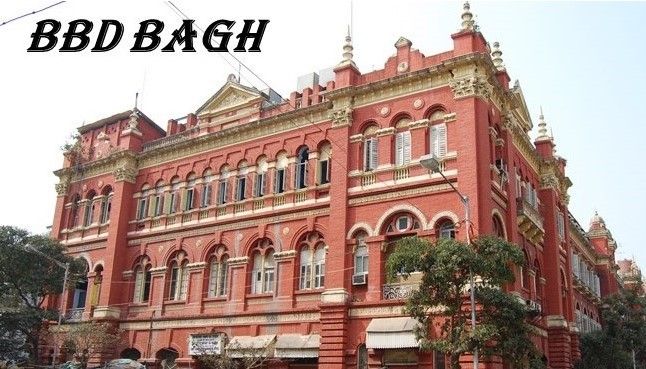
B.B.D. Bagh, once known as Dalhousie Square, is one of the most historically significant and architecturally rich areas of Kolkata, West Bengal. Built around the picturesque Lal Dighi tank, this square has been the administrative and commercial hub of the city since the colonial era. Even today, it remains the nerve center of governance and finance, while preserving its heritage and cultural legacy.
Etymology and Renaming
Originally named after Lord Dalhousie, Governor-General of India (1847–1856), the square was renamed B.B.D. Bagh After Independence. The new name honors three young revolutionaries — Binoy Basu, Badal Gupta, and Dinesh Gupta — who sacrificed their lives in 1930 after assassinating Colonel N.S. Simpson, infamous for his cruelty toward prisoners. Their martyrdom transformed the square into a symbol of resistance and patriotism, forever linking it to India’s freedom struggle.
Location and Layout
Situated near the Hooghly River, south of the Howrah Bridge, B.B.D. Bagh spans about 2 sq km in central Kolkata. Its design, centered around Lal Dighi, reflects the British colonial vision of authority and order. The square is surrounded by Victorian-style buildings, government offices, and financial institutions, earning it the nickname Office Paraliterally, “the locality of offices.”
Historical Legacy
The area’s colonial past is deeply etched in its structures and stories. In 1756, Nawab Siraj ud-Daulah attacked the British settlement here, leading to the infamous Black Hole Tragedy. Soon after, Robert Clive recaptured the city, establishing Calcutta as the capital of British India.
The Writer’s Building, originally constructed for East India Company clerks, later became the secretariat of the Viceroy of India. It was here that Binoy, Badal, and Dinesh carried out their daring attack in 1930, cementing the site’s place in India’s independence movement.
Modern Significance
Today, B.B.D. Bagh remains The Administrative Core of West Bengal. The Writer’s Building continues to house the Chief Minister’s office. Surrounding it are several landmarks:
- General Post Office — A majestic domed structure to the west.
- Reserve Bank of India — A key financial institution.
- Eastern Railway Headquarters — Symbolizing Kolkata’s role in India’s transport network.
- Raj Bhavan — The Governor’s residence, once home to the Viceroy.
- Royal Exchange Building — Once Robert Clive’s residence, now housing the Bengal Chamber of Commerce.
- Calcutta Stock Exchange — A hub of financial activity.
The area also boasts the Great Eastern Hotel, HSBC offices, and numerous colonial-era administrative buildings, making it a unique blend of heritage and modern commerce.
Architectural and Cultural Heritage
B.B.D. Bagh is one of the finest surviving ensembles of British colonial architecture. Its grand facades, domes, and colonnades reflect Victorian and neoclassical styles. The square also features a statue of Maharaja Lakshmeshwar Singh of Darbhanga, sculpted by Edward Onslow Ford, adding to its cultural richness.
Nearby Attractions
Visitors to B.B.D. Bagh can explore several historic sites within walking distance:
- St. John’s Church — One of the oldest churches in Kolkata.
- St. Andrew’s Church — A Scottish Presbyterian landmark.
- Indian Museum — The oldest museum in India.
- Lal Dighi — The central tank around which the square was built.
Conclusion
B.B.D. Bagh is not just a square; it is a living chronicle of Kolkata’s journey from colonial subjugation to independence and modern governance. With its blend of history, architecture, and administrative importance, it remains The Beating Heart of the City — a place where the past and present coexist in remarkable harmony.