
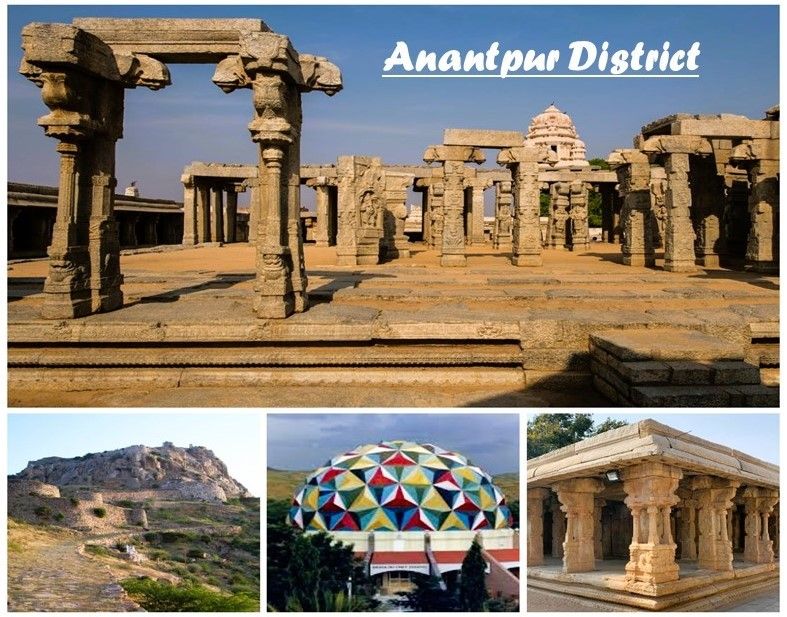
Located in the heart of the Rayalaseema region of Andhra Pradesh, Ananthapuramu formerly known as Anantapur is a district that embodies a unique blend of historical depth, spiritual richness, and agricultural resilience. Spanning an impressive 19,130 square kilometers, it stands as the largest district in the state and plays a vital role in shaping the socio-economic fabric of southern India.
Geography and Demographics
Ananthapuramu is strategically bordered by Kurnool and Nandyal districts to the north, Kadapa to the east, Chittoor to the southeast, and the newly carved Sri Sathya Sai district to the south. To the west and southwest, it shares boundaries with Karnataka’s Chitradurga and Bellary districts.
Despite its semi-arid climate and low annual rainfall averaging between 381 to 508 mm the district is sustained by six rivers: Penna, Papagni, Chitravathi, Thakaleru, Swarnamukhi, and Vedavathi. These rivers serve as lifelines for agriculture and daily life in the region.
As per the 2011 Census, Ananthapuramu had a population of approximately 4.08 million, with a density of 213 people per square kilometer. The District comprises over 968,000 households, with a predominantly rural demographic. Telugu is the principal language spoken by over 84% of the population, followed by Urdu, Kannada, and Lambadi.
Tourism: A Journey Through Time and Faith
Ananthapuramu is a treasure trove for travelers seeking historical marvels and spiritual sanctuaries. Its cultural landscape is dotted with monuments that echo tales of dynasties, devotion, and artistry:
- Lepakshi Temple: A masterpiece of Vijayanagara architecture, this temple is renowned for its hanging pillar and intricate frescoes. Dedicated to Lord Veerabhadra, it is a harmonious blend of mythology and craftsmanship.
- Gooty Fort: Perched atop a hill, this ancient fort dates back to the Chalukya period and was later fortified by the Vijayanagara rulers. It offers sweeping views and insights into the region’s military history.
- Penukonda Fort: Once the second capital of the Vijayanagara Empire, Penukonda is steeped in royal legacy. Its ruins and temples narrate stories of grandeur and governance.
- Puttaparthi: The birthplace of Sri Sathya Sai Baba, this town is a global spiritual hub. The Prasanthi Nilayam Ashram draws thousands of devotees seeking peace and enlightenment.
These destinations, along with vibrant festivals and scenic vistas, make Ananthapuramu a compelling stop for cultural and spiritual tourism.
Economy: Cultivating Prosperity
Agriculture is the cornerstone of Ananthapuramu’s economy. Known as the “Groundnut Capital of India,” the district is celebrated for its vast groundnut cultivation. Other significant crops include sunflower, millets, cotton, and rice.
Despite facing climatic adversities, local farmers have adopted modern irrigation techniques such as borewells and drip systems to enhance productivity. The district is also experiencing industrial diversification, with growth in sectors like textiles, cement manufacturing, and agro-processing. Traditional crafts such as Lepakshi painting and handloom weaving continue to thrive, preserving cultural heritage while contributing to the economy.
In the fiscal year 2013–14, Ananthapuramu’s Gross District Domestic Product (GDDP) was ₹35,838 crores, accounting for 6.8% of Andhra Pradesh’s Gross State Domestic Product (GSDP). The per capita income stood at ₹69,562, with the tertiary sector emerging as the largest contributor.
Historical Legacy: Dynasties and Trade Routes
Ananthapuramu’s historical narrative is enriched by the legacies of ancient dynasties and its role in trade and pilgrimage routes. Archaeological evidence suggests that Gooty was a prominent Buddhist center between the 3rd century BCE and 3rd century CE.
The region later came under the rule of the Chalukyas and subsequently the Vijayanagara Empire. The Nayaka rulers governed until the empire’s decline in 1565. In the 18th century, Gooty Fort was seized by the Marathas and later ceded to the Nizam of Hyderabad by Tipu Sultan in 1789.
Monuments such as the Gooty and Penukonda forts, along with scattered temple ruins, stand as enduring symbols of Ananthapuramu’s strategic and architectural significance.
Religious Harmony: A Spirit of Inclusivity
Religion plays a vital role in shaping the district’s cultural identity. Ananthapuramu is home to a diverse array of places of worship, reflecting its pluralistic ethos:
- Lepakshi Temple: A spiritual and artistic marvel.
- Sri Sathya Sai Baba Ashram: A global center for meditation and spiritual learning.
- ISKCON Temple, Anantapur: Promoting Krishna consciousness through contemporary spiritual practices.
- Mosques and Churches: Serving various communities and exemplifying religious harmony.
Festivals such as Ugadi, Diwali, Eid, and Christmas are celebrated with fervor, showcasing the district’s vibrant and inclusive spirit.
Connectivity: Bridging Heritage and Progress
Ananthapuramu boasts a robust transport network. National Highway 44 runs through the district, linking it to major cities like Hyderabad and Bangalore. A web of state highways and rural roads ensures accessibility to even the most remote villages.
The Anantapur Railway Station is a key junction on the South Central Railway network, offering connectivity across India. APSRTC and private bus services facilitate regular intra- and inter-district travel. The nearest airport is located in Bangalore, approximately 200 kilometers away, providing air connectivity for long-distance travelers.
Conclusion: A District of Many Dimensions
Ananthapuramu is not merely a geographical entity it is a living chronicle of resilience, heritage, and innovation. From its ancient forts and spiritual centers to its agricultural prowess and industrial aspirations, the district offers a multifaceted experience that encapsulates The Essence of Andhra Pradesh.
Whether you're a history buff, a spiritual seeker, or someone fascinated by rural ingenuity, Ananthapuramu welcomes you to explore its rich tapestry of stories, landscapes, and traditions.